
Evening · 3½ min
Stretches Before Bed
A quiet routine to slow down before bed, with gentle hip stretches, a supine twist and slow breathing. About four minutes.
Do this routine in the Prep app
Get Pre-Bed Calm as a guided, timed session — with every move demonstrated and adjustable to how you feel.
Download on iOS
 1
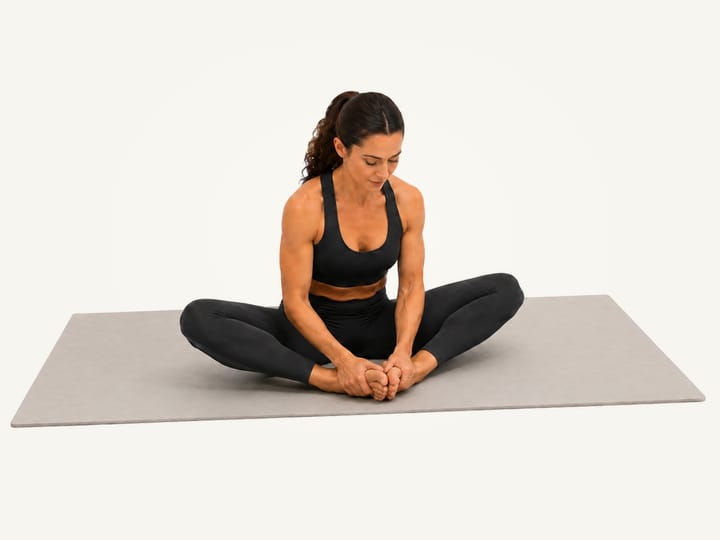
1Seated Butterfly
30sSit tall with the soles of your feet together and let your knees open.
How to do it
- Sit tall with your knees bent and feet flat on the floor. Rest your hands beside your hips for balance.
- Bring the soles of your feet together and let your knees open comfortably. Hold your feet lightly with both hands.
- Keep your spine long and hinge slightly forward from your hips if comfortable. Relax your knees without pressing them down, and breathe slowly for the prescribed time.
Why it matters
Stretch the inner thighs in a seated position with both hips opening outwards.
How it should feel
A gentle stretch through the inner thighs and groin.
Make it easier or harder
- EasierRaise your seat. Sit on a cushion and leave out the forward fold.
- HarderBring the feet nearer. Add a small hip hinge while keeping the back long.
 2
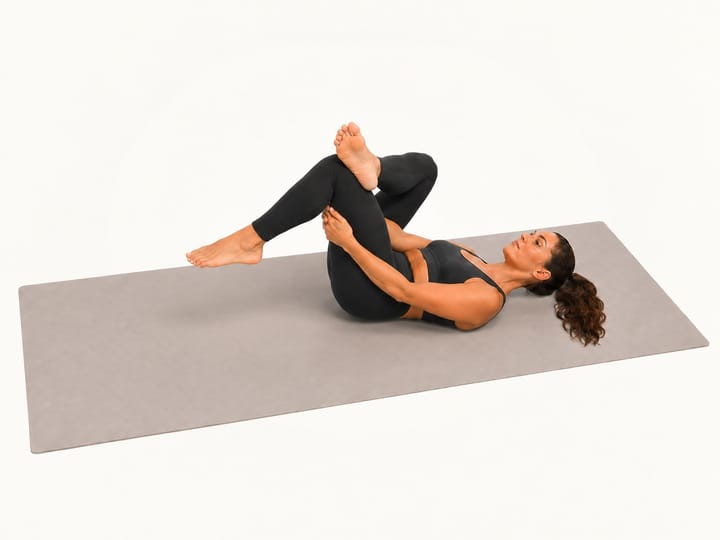
2Figure Four (Supine)
1mLie on your back, cross one ankle over the other thigh and gently draw the supporting leg in.
How to do it
- Lie on your back with both knees bent and feet flat. Rest your head, shoulders and pelvis on the mat.
- Rest your right ankle on your left thigh, just above the knee. Flex the right foot and let the right knee open comfortably.
- Lift your left foot slightly. Reach your right arm through the opening between your legs and your left arm around the outside. Join your hands behind the left thigh.
- Keep the same grip and gently draw the left thigh closer until you feel a comfortable stretch in the right glute. Keep your head and shoulders down. Release and lower the left foot before uncrossing and repeating on the other side; in a timed routine, switch at the cue.
Why it matters
Stretch the outer hip while the floor supports your body and removes the need to balance.
How it should feel
A comfortable stretch through the outer hip and glute of the crossed leg.
Make it easier or harder
- EasierLeave the foot grounded. Hold the crossed-leg position without pulling the thigh in.
- HarderDraw the thigh closer. Use a small increase while the pelvis stays level.
When to stop
Stop for back pain, knee or hip pain, pins and needles, or symptoms travelling down the leg.
 3
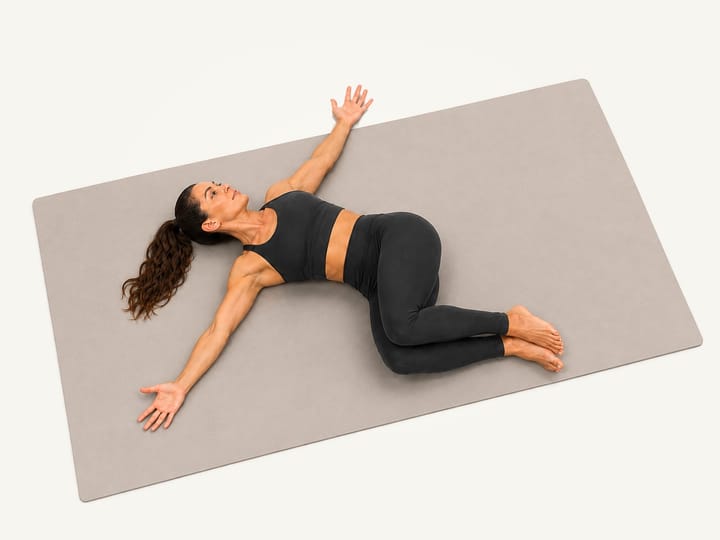
3Supine Twist
1mLie on your back and lower both bent knees gently to one side.
How to do it
- Lie on your back with your knees bent and feet on the mat. Open your arms out in line with your shoulders, resting them in a comfortable T. Let your head rest in a comfortable neutral position.
- Bring both bent knees towards your chest, keeping your knees and feet together. Slowly lower them to your right only as far as comfortable, with your upper back and shoulders resting easily. Use a folded blanket under the knees if needed, and breathe steadily in the gentle stretch.
- After the hold, or at the side-switch cue in a routine, slowly bring both knees back to centre before lowering them together to your left. Keep your head and shoulders comfortable and use support under your knees if needed. When you finish, return to centre and place both feet on the mat.
Why it matters
Explore a gentle trunk rotation with your head and upper body supported.
How it should feel
A gentle stretch around the outer hip, lower back or chest.
Make it easier or harder
- EasierSupport the knees. Rest them on a pillow or folded blanket.
- HarderLet the knees settle lower. Use a small change only while the shoulders stay comfortable.
When to stop
Ease out if the twist causes pinching or pain.
 4
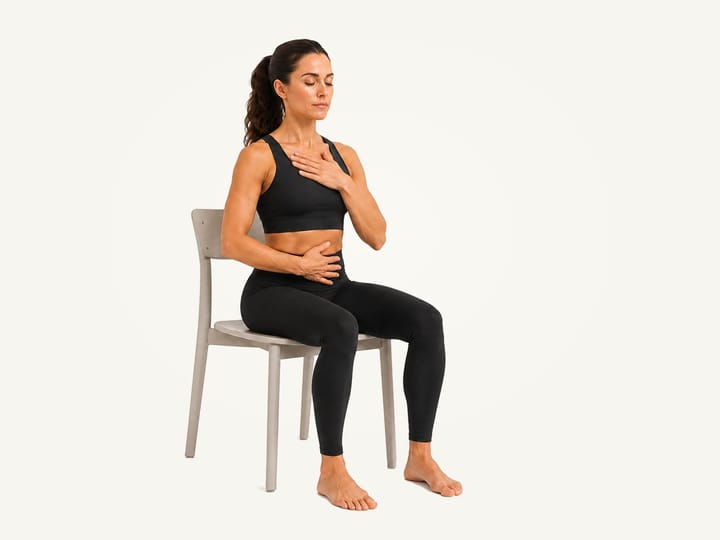
4Diaphragmatic Breathing
1mNotice the belly rise and fall during relaxed breathing.
How to do it
- Sit comfortably with your feet on the floor, or lie with your head and knees supported. Place one hand on your upper chest and one on your belly just below the ribs.
- Breathe in gently through your nose. Allow your belly hand to rise while your upper chest stays relatively quiet.
- Breathe out gently through your nose and let the belly hand settle back. Keep your shoulders and jaw relaxed.
- Continue a comfortable, steady rhythm for the remaining time. Avoid forcing large breaths.
Why it matters
Notice gentle belly movement as you practise relaxed breathing.
How it should feel
The belly rising and falling gently, with a relaxed neck and shoulders.
Make it easier or harder
- EasierLie with knees bent. Support your head and let the shoulders rest.
When to stop
Stop and return to natural breathing if you feel dizzy, light-headed or uncomfortable.


Do this routine in the Prep app
Get Pre-Bed Calm as a guided, timed session — with every move demonstrated and adjustable to how you feel.
Download on iOS