
Hamstrings · 3 min
Hamstring Stretches for Tight Hamstrings
Loosen tight hamstrings with a short, follow-along routine you can do anywhere. About three minutes of targeted stretches to restore range through the back of your legs.
Do this routine in the Prep app
Get Tight Hamstrings as a guided, timed session — with every move demonstrated and adjustable to how you feel.
Download on iOS
 1
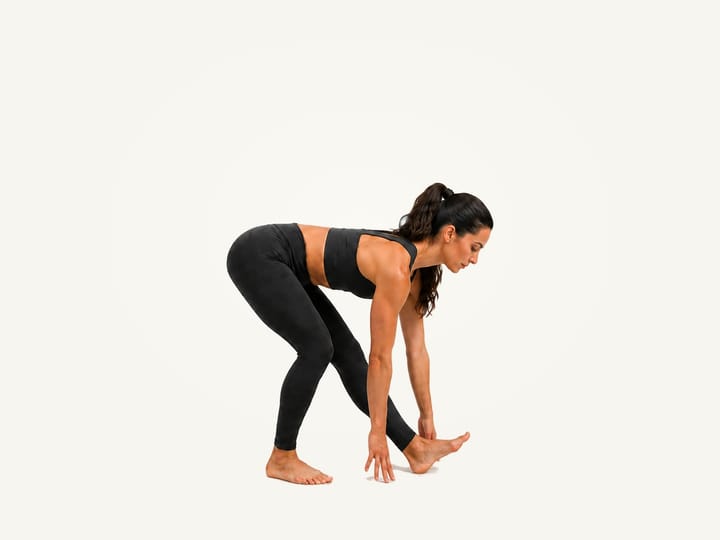
1Hamstring Scoops
30sStep one heel forward and scoop the hands toward the toes.
How to do it
- Place your left heel a short step forward with toes lifted. Keep the left leg mostly straight and soften your right knee, with your right foot flat. Let your hips sit slightly back as you prepare to scoop.
- Send your hips back and hinge forward with a long back. Sweep both hands down toward your left heel and past the toes in a comfortable scooping motion; keep your right foot flat and avoid forcing the reach.
- Bring your torso back upright as your hands sweep forward and up, then relax your arms and bring your left foot back beneath you.
- Place your right heel forward with toes lifted, soften your left knee and repeat the gentle hinge and scoop. Stand up between sides and continue alternating, stepping forward or resetting in place as space allows.
Why it matters
Explore a gentle hip hinge over a grounded heel while coordinating an arm sweep.
How it should feel
A mild stretch behind the front leg, with the supporting foot firmly planted.
Make it easier or harder
- EasierScoop higher. Use a smaller hip hinge and a higher hand sweep.
- HarderSlow the scoop. Keep the same comfortable reach with a smoother return.
 2
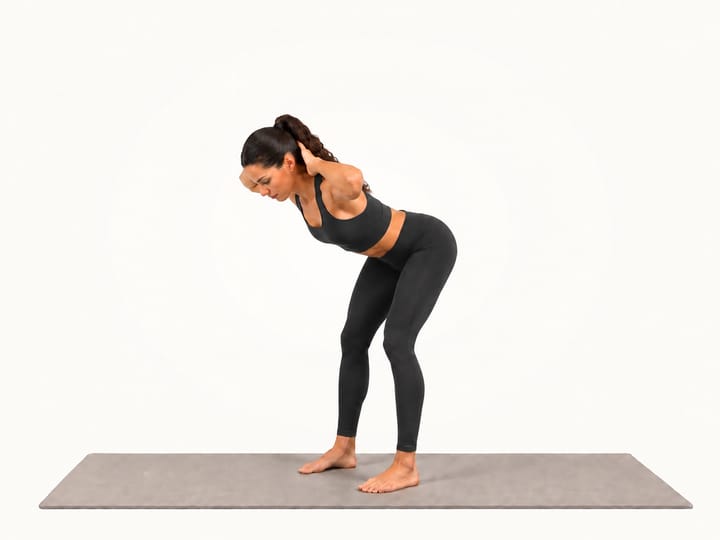
2Good Mornings
30sHinge at the hips with a long spine, then return to standing.
How to do it
- Stand with your feet hip-to-shoulder width apart and both soles flat. Soften your knees and rest your hands lightly behind your head, without pulling on your neck.
- Push your hips back and let your torso tip forward. Keep your knees softly bent, both feet flat and your head in line with your comfortably long back.
- Continue hinging only as far as a gentle hamstring pull, stopping before your back rounds. Press through both feet and bring your hips beneath you to stand tall without leaning backward. Repeat smoothly for the allotted time.
Why it matters
Practise moving from the hips while keeping both feet grounded.
How it should feel
Light work and a gentle lengthening through the backs of the thighs and buttocks.
Make it easier or harder
- EasierHands on hips. Practise a smaller hinge with light hand feedback.
- HarderLower more slowly. Keep the same bodyweight movement and comfortable range.
 3
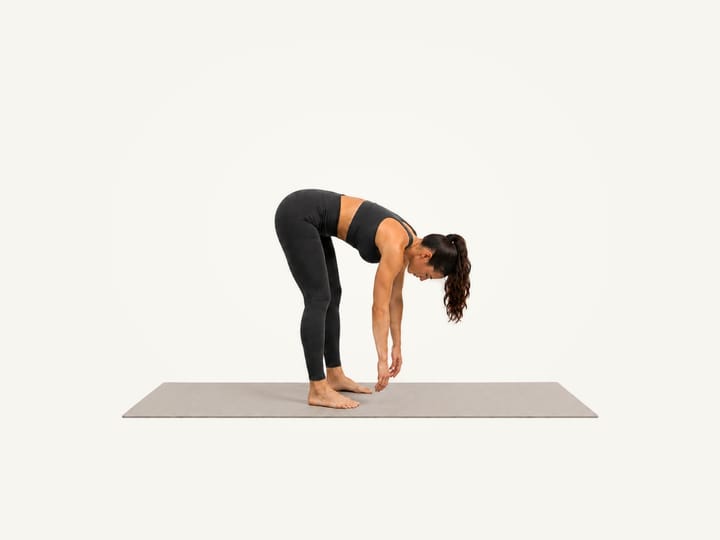
3Standing Hamstring Fold
30sFold forwards from the hips with soft knees and your arms hanging.
How to do it
- Stand with feet hip-width apart, weight even through both feet and knees slightly bent.
- Hinge forward from your hips and let your arms hang towards the floor. Bend your knees enough to keep the fold comfortable, without forcing your hands down. Keep your neck relaxed and breathe for the prescribed time. When finished, bend your knees a little more and slowly return to standing.
Why it matters
Explore a standing hamstring stretch with the depth controlled by your hip hinge and knee bend.
How it should feel
A gentle stretch along the backs of your thighs.
Make it easier or harder
- EasierBend the knees more. Use a shallower fold or rest hands on a stable chair.
- HarderReduce the knee bend. Keep the stretch gentle without locking the knees.
When to stop
Stop if the fold causes back pain or pinching.
 4
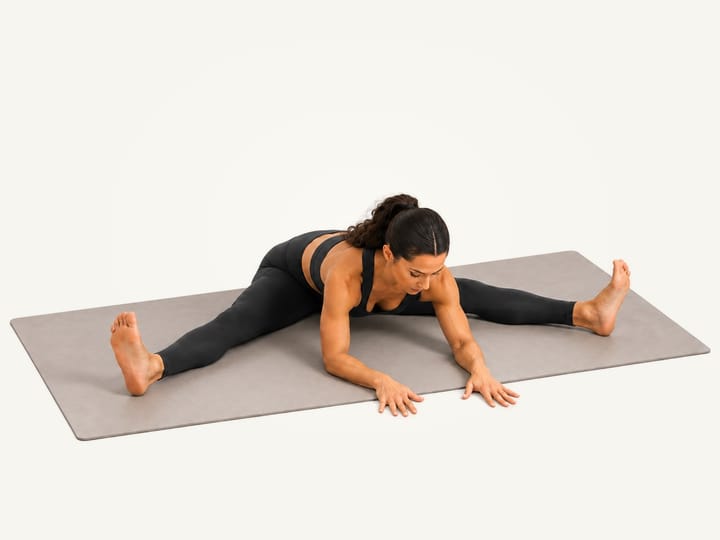
4Straddle Fold
30sSit with your legs in a comfortable V and gently hinge forwards.
How to do it
- Sit tall with your legs in a comfortable V, knees and toes facing up. Rest on your sitting bones and place your hands on the floor in front of you.
- Walk one hand forward, then the other, and begin to hinge from your hips. Keep your back long and both heels grounded.
- If comfortable, lower one forearm to the floor, then the other, keeping your knees facing up. Stay on your hands if that already gives enough stretch.
- If comfortable, ease your forearms slightly forward and let your chest lower a little farther, keeping your back long. Breathe steadily for the allotted time. Press into your palms and walk your hands back to sit upright.
Why it matters
Explore an inner-thigh and hamstring stretch through a supported seated hinge.
How it should feel
A steady stretch in the inner thighs and backs of the legs.
Make it easier or harder
- EasierSit higher and narrower. Use a folded blanket, bend the knees slightly or remain upright.
- HarderWalk the hands forwards. Add a little range with a gentle stretch and long back.
When to stop
Ease out if the position causes pinching or pain.
 5
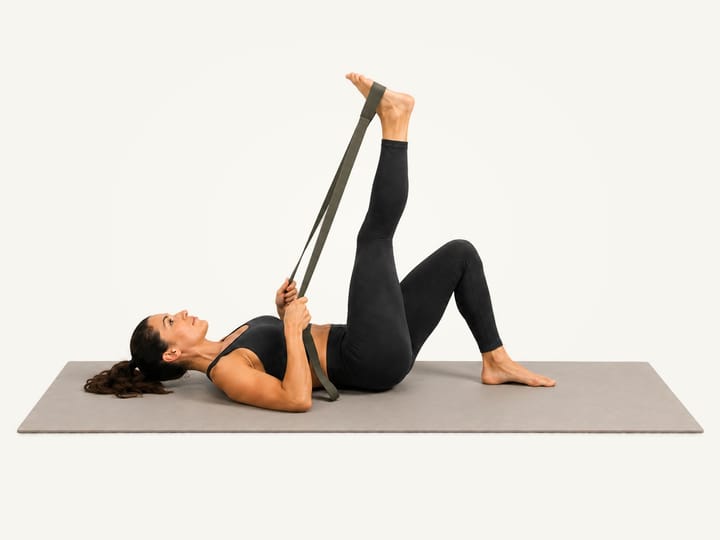
5Lying Hamstring Stretch
1mLie on your back and support one raised leg with a strap around the foot.
No strap? A towel works instead.
How to do it
- Lie on your back with both knees bent. Bring your right knee towards you to place the strap around the ball of that foot, just behind the toes, and hold one end in each hand. Let the right heel rest lightly on the mat with the knee still bent and keep the left foot planted. Rest your head and pelvis comfortably.
- Bring your right knee towards you, then gradually raise and straighten that leg only until you feel a gentle stretch behind the thigh. Keep your left foot planted and your head and pelvis resting on the mat. A small bend in the raised knee is fine; breathe without bouncing.
- After the hold, or at the side-switch cue in a routine, ease the tension, bend and lower your right leg, and place both feet down. Transfer the strap to the ball of your left foot and hold one end in each hand. Keep your right foot planted as you raise your left leg into the same comfortable stretch.
Why it matters
Support the leg while working on flexibility at the back of the thigh.
How it should feel
A gentle, steady stretch behind the raised thigh.
Make it easier or harder
- EasierLower the raised leg. Keep both knees slightly bent and reduce strap tension.
- HarderLengthen the resting leg. Slide it along the mat without increasing the stretch force.
When to stop
Stop if symptoms shoot below the knee or the foot becomes numb or tingly.


Do this routine in the Prep app
Get Tight Hamstrings as a guided, timed session — with every move demonstrated and adjustable to how you feel.
Download on iOS