
Running · 4½ min · Static recovery
Post-Run Cool-Down Stretches
Ease down after a run with gentle stretches for your calves, hamstrings, hips and quads. About five minutes to help your legs recover for the next session.
Do this routine in the Prep app
Get Post-Run Cool-Down as a guided, timed session — with every move demonstrated and adjustable to how you feel.
Download on iOS
 1
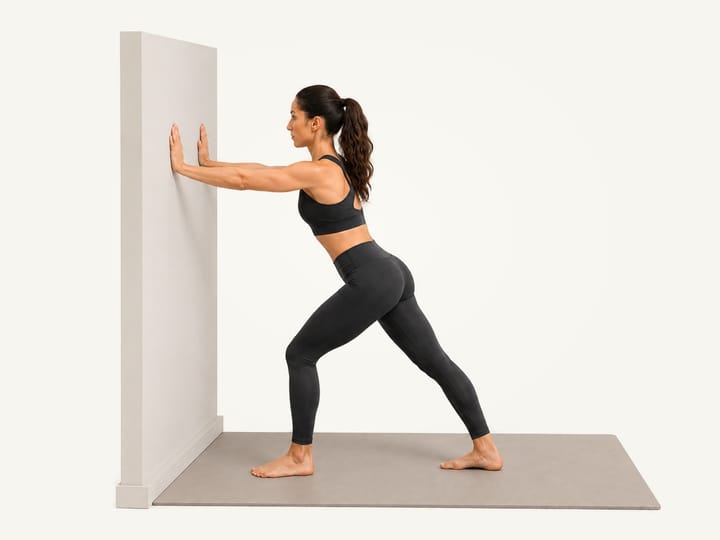
1Calf Wall Stretch (Straight Leg)
1mLean towards a wall with your back knee straight and heel grounded.
How to do it
- Stand facing a wall with your feet hip-width apart. Place both palms flat on the wall at shoulder height.
- Adjust your front foot if needed, then step your left foot back, pointing it toward the wall. Place the whole sole and heel on the floor, keeping your left knee straight and both hands supported on the wall.
- Gently bend your right knee and lean toward the wall, keeping your left knee straight and heel grounded. Hold comfortably until the switch-sides cue, then ease out, bring your feet together and repeat with your right leg back for the remaining time.
Why it matters
Stretch the calf with the knee straight, complementing the bent-knee version.
How it should feel
A gentle stretch through the calf of the back leg.
Make it easier or harder
- EasierShorten the stance. Bring the back foot nearer and lean less.
- HarderIncrease the lean gently. Keep the back knee straight and heel down.
 2
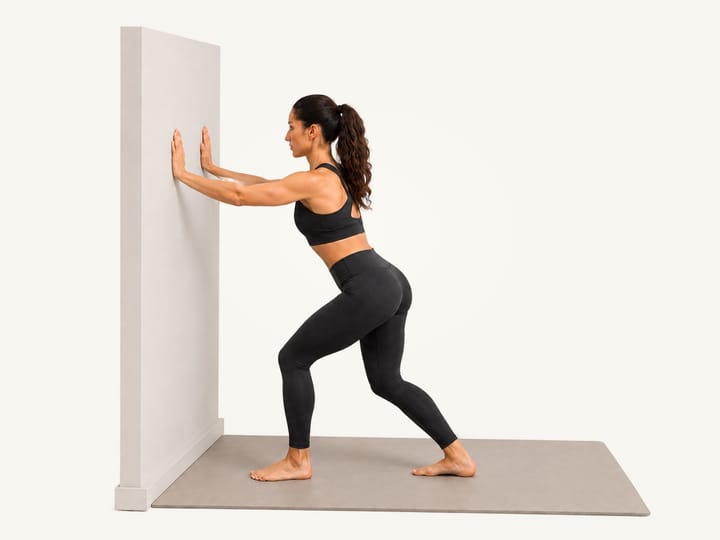
2Calf Wall Stretch (Bent Knee)
1mBend both knees gently at a wall, keeping the rear heel on the floor.
How to do it
- Stand facing a wall with feet hip-width apart and both palms flat on it at shoulder height.
- Step the left foot a short distance back with both feet pointing forwards. Bend both knees gently, keeping the left heel down. Hold a comfortable lower-calf stretch, then release and repeat with the right foot back; follow the routine cue if timed.
Why it matters
Use a bent-knee position to place the stretch lower in the calf.
How it should feel
A gentle stretch low in the calf of the back leg.
Make it easier or harder
- EasierUse a smaller bend. Shorten the stance and keep both hands supported.
- HarderBend a little more. Increase the bend only with the rear heel grounded.
When to stop
Stop immediately for sharp Achilles pain, a sudden pop or new swelling.
 3
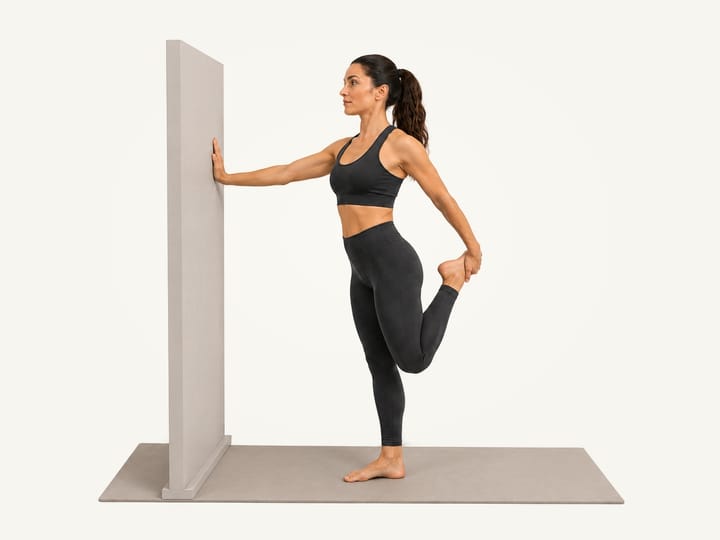
3Standing Quad Stretch
1mStand with support and gently bring one heel towards your bottom.
How to do it
- Stand tall with feet hip-width apart, facing a wall or sturdy support. Place your right hand on it for balance.
- Bend your left knee and hold your left foot or ankle with your left hand. Gently bring your heel toward your buttock, keeping your knees close and your tummy gently braced.
- At the switch-sides cue, gently release your left foot and place it on the floor. Place your left hand on the support, then bend your right knee and hold your right foot or ankle with your right hand. Keep your knees close and tummy gently braced. Hold comfortably for the remaining time, then lower the foot with control.
Why it matters
Stretch the front of the thigh while standing with support.
How it should feel
A gentle stretch along the front of the bent-leg thigh.
Make it easier or harder
- EasierExtend your reach. Use a towel or strap around the foot, with hand support.
When to stop
Stop if you feel knee or kneecap pain; do not force the knee bend.
 4
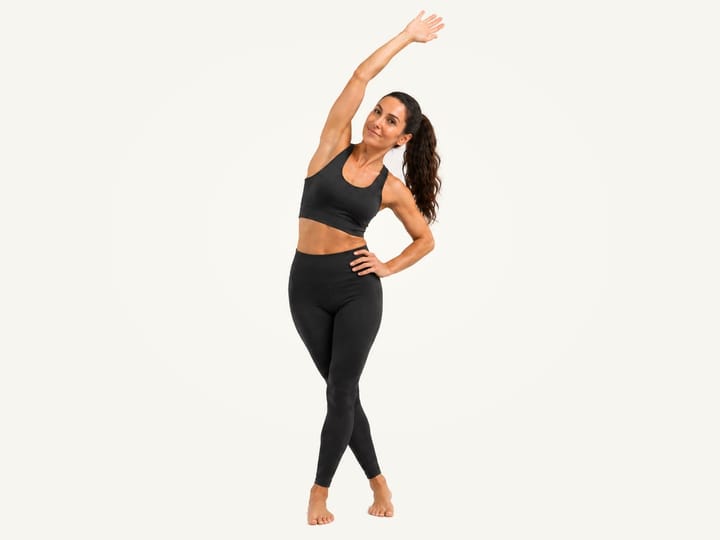
4IT Band Cross-Over
1mCross one foot behind the other and reach gently to the opposite side.
How to do it
- Stand tall and cross your right foot behind your left. Keep both feet grounded and facing generally forward, with hands resting lightly on your hips.
- Raise your right arm overhead and reach gently to the left, allowing the right hip to shift slightly right. Keep your chest facing forward and both feet grounded. Hold a mild outer-hip stretch until you are ready to change sides, or the routine cues the switch.
- When you are ready to change sides, or at the routine cue, return upright, lower the arm and uncross your feet. Cross the left foot behind the right, then reach the left arm overhead to the right. Hold gently; follow the allotted time if you are in a timed routine.
Why it matters
Explore a lateral-hip stretch with a gentle standing side bend.
How it should feel
A mild stretch along the outer hip and thigh of the back leg.
Make it easier or harder
- EasierUse a smaller side bend. Keep the reaching arm lower and stand near support.
- HarderLengthen the overhead reach. Keep both feet grounded and your chest facing forwards.
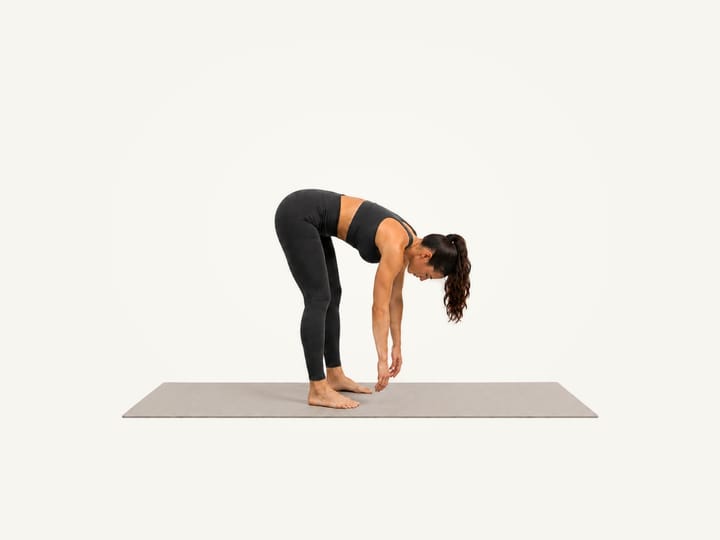 5
5Standing Hamstring Fold
30sFold forwards from the hips with soft knees and your arms hanging.
How to do it
- Stand with feet hip-width apart, weight even through both feet and knees slightly bent.
- Hinge forward from your hips and let your arms hang towards the floor. Bend your knees enough to keep the fold comfortable, without forcing your hands down. Keep your neck relaxed and breathe for the prescribed time. When finished, bend your knees a little more and slowly return to standing.
Why it matters
Explore a standing hamstring stretch with the depth controlled by your hip hinge and knee bend.
How it should feel
A gentle stretch along the backs of your thighs.
Make it easier or harder
- EasierBend the knees more. Use a shallower fold or rest hands on a stable chair.
- HarderReduce the knee bend. Keep the stretch gentle without locking the knees.
When to stop
Stop if the fold causes back pain or pinching.


Do this routine in the Prep app
Get Post-Run Cool-Down as a guided, timed session — with every move demonstrated and adjustable to how you feel.
Download on iOS