
Running · 4¼ min · Dynamic prep
Pre-Run Warm-Up Routine
A quick dynamic warm-up to fire up your hips, glutes and calves before an easy run or tempo session. About four minutes, with every move photographed and explained.
Do this routine in the Prep app
Get Pre-Run Warm-Up as a guided, timed session — with every move demonstrated and adjustable to how you feel.
Download on iOS
 1
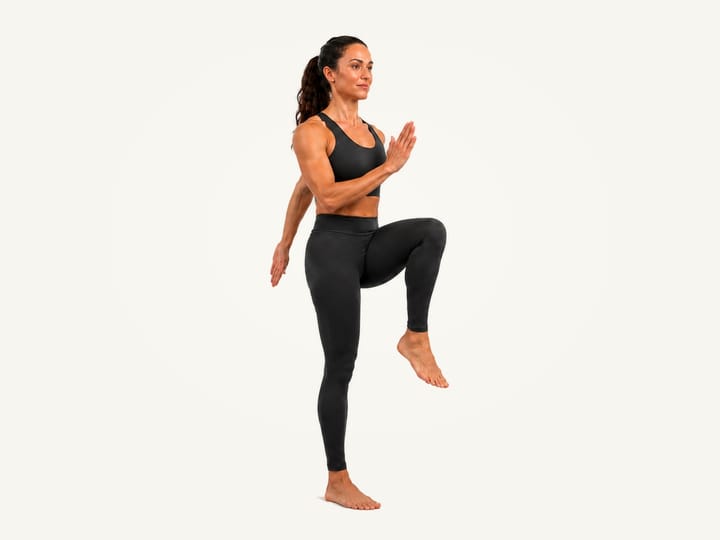
1High Knees
30sMarch or jog in place, lifting alternate knees to a comfortable height.
How to do it
- Stand tall with feet hip-width apart. Bend your elbows and keep your hands relaxed.
- Lift your left knee to a comfortable height, up to hip height, as your right arm swings forward. Keep your chest stacked over your hips and your right foot grounded.
- Lower your left foot, then lift your right knee as your left arm swings forward. Continue alternating. Start with a march and build to a light jog only if comfortable.
Why it matters
Practise alternating knee lifts with the opposite arm as part of an active warm-up.
How it should feel
A steady marching or light jogging rhythm, with the hips lifting each knee.
Make it easier or harder
- EasierMarch lower. Use slower steps and a comfortable knee height.
- HarderBuild to a light jog. Keep the same tall posture and relaxed arms.
 2
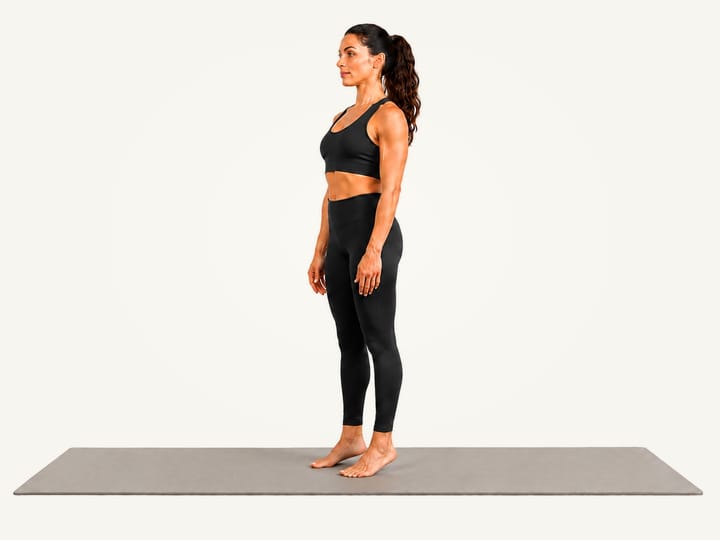
2Heel-to-Toe Rocks
30sRock smoothly from heels to toes to wake up the ankles and lower legs.
How to do it
- Stand tall with feet hip-width apart and both soles flat. Keep your knees soft and use a stable wall or secured chair if needed for balance.
- Slowly lift both heels a small amount while the balls of the feet and toes stay grounded. Keep your torso upright, then lower both heels fully to the mat.
- With both heels grounded, gently lift both forefeet and toes toward your shins. Lower your feet flat, then repeat the heel-to-toe sequence smoothly without bouncing or swaying.
Why it matters
Practise lifting the heels and forefeet in turn while keeping your trunk steady.
How it should feel
Alternating work through the calves and front of the shins as the feet move.
Make it easier or harder
- EasierMake the lifts smaller. Hold a wall or secured chair for balance.
- HarderSlow each lowering. Set the feet down gently between directions.
 3
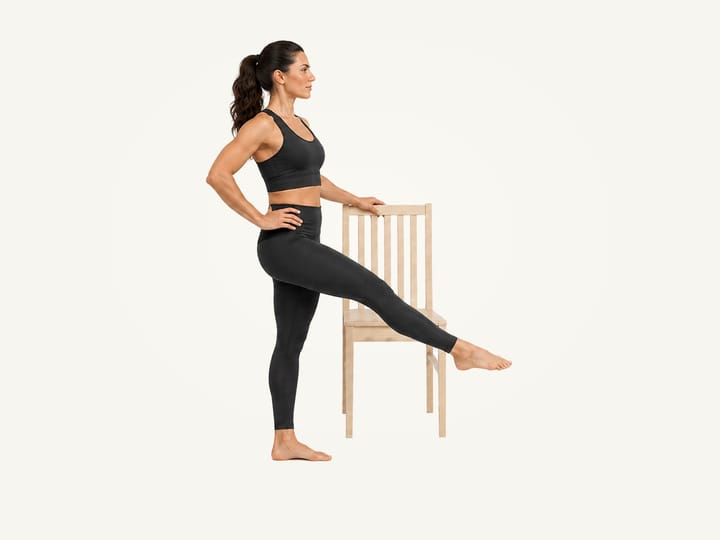
3Leg Swings (Forward/Back)
45sHold a stable support and swing one leg gently forward and back from the hip.
How to do it
- Stand with a stable chair, wall or post on your right and rest your right hand on it. Stand tall over your right foot, with your left toes resting lightly on the floor.
- Lift your left foot and swing the leg gently forward from the hip. Keep the knee soft and your torso tall; use a comfortable range without leaning back.
- Let the left leg pass back beneath you and swing gently behind. Keep your pelvis steady and avoid arching your back. Continue smoothly forward and back before changing sides.
- When changing sides, stop and place both feet on the floor. Release your hand and step around the support so it is on your left. Rest your left hand on it, stand over your left foot and repeat with your right leg.
Why it matters
Practise forward-and-back hip movement while the standing leg keeps you steady.
How it should feel
Easy movement around the swinging hip and thigh, with the standing foot firmly planted.
Make it easier or harder
- EasierShorten the swing. Move slowly with the swinging knee slightly bent.
- HarderSlow the return. Control the leg as it passes beneath you.
 4
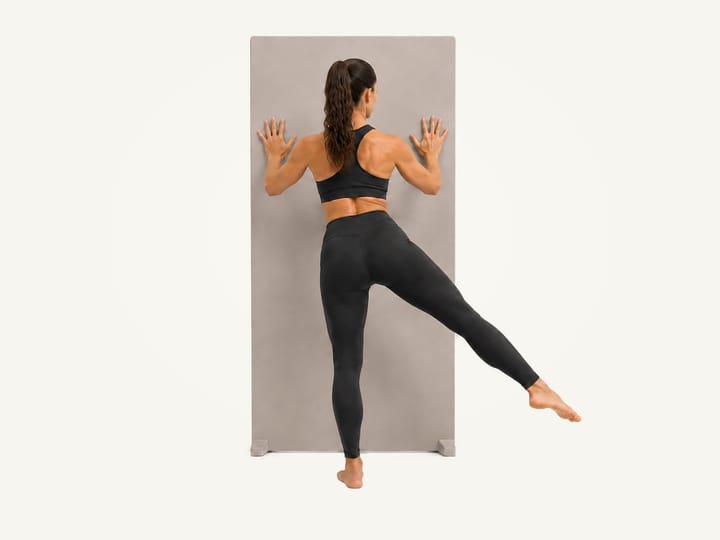
4Leg Swings (Lateral)
45sHand on support, swing one leg side to side across the body.
How to do it
- Face a stable wall with both hands supported at shoulder height. Stand tall with space for your right leg to move; keep the left foot pointing toward the wall.
- Shift onto the softly bent left leg and lift the right foot. Swing it gently across in front of the standing leg, keeping your chest toward the wall.
- Let the right leg swing back out to the side through a comfortable arc. Keep both hands supported and your trunk steady. Repeat smoothly, then put both feet down and change legs for the remaining time.
Why it matters
Explore side-to-side hip movement while keeping your trunk facing forward.
How it should feel
Comfortable movement along the inside and outside of the swinging hip and thigh.
Make it easier or harder
- EasierUse a smaller arc. Slow down and let the foot brush the floor if helpful.
- HarderControl a wider arc. Increase only while you can keep facing forward.
 5
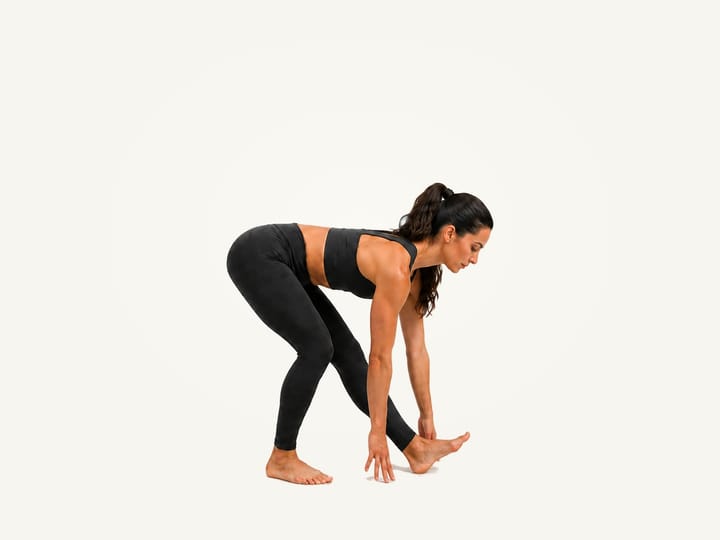
5Hamstring Scoops
30sStep one heel forward and scoop the hands toward the toes.
How to do it
- Place your left heel a short step forward with toes lifted. Keep the left leg mostly straight and soften your right knee, with your right foot flat. Let your hips sit slightly back as you prepare to scoop.
- Send your hips back and hinge forward with a long back. Sweep both hands down toward your left heel and past the toes in a comfortable scooping motion; keep your right foot flat and avoid forcing the reach.
- Bring your torso back upright as your hands sweep forward and up, then relax your arms and bring your left foot back beneath you.
- Place your right heel forward with toes lifted, soften your left knee and repeat the gentle hinge and scoop. Stand up between sides and continue alternating, stepping forward or resetting in place as space allows.
Why it matters
Explore a gentle hip hinge over a grounded heel while coordinating an arm sweep.
How it should feel
A mild stretch behind the front leg, with the supporting foot firmly planted.
Make it easier or harder
- EasierScoop higher. Use a smaller hip hinge and a higher hand sweep.
- HarderSlow the scoop. Keep the same comfortable reach with a smoother return.
 6
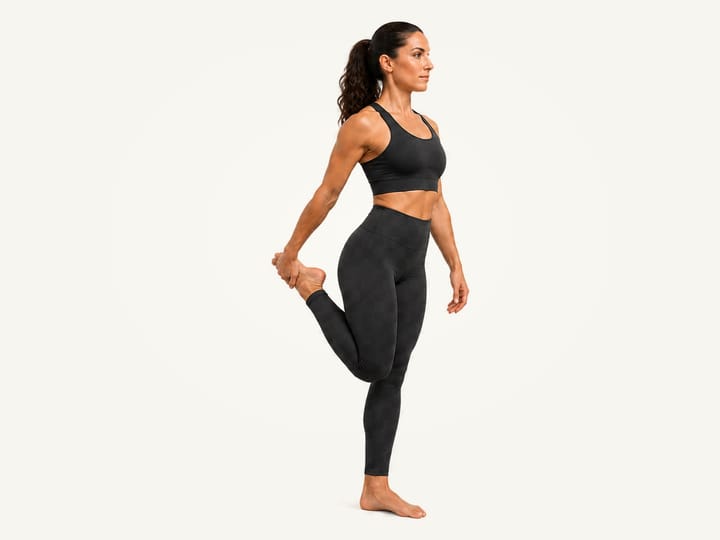
6Walking Quad Pull
30sWalk forward, pulling one heel toward the glute each step.
How to do it
- Stand tall with clear space ahead and shift onto your left foot. Bend your right knee and take a light hold of the right foot or ankle with your right hand. Bring the heel towards the buttock only as far as comfortable, keeping the torso upright and knees comfortably near each other.
- Release your right foot before placing it down. Step onto the right foot, then bend the left knee and lightly catch the left foot or ankle with your left hand. Release and step again, alternating gently for the remaining time. Finish with both feet down. Practise in place with support if balance is difficult.
Why it matters
Link a gentle front-thigh stretch with a controlled step onto the next leg.
How it should feel
A comfortable stretch through the front of the lifted thigh, with the standing leg keeping you balanced.
Make it easier or harder
- EasierStay beside support. Hold a wall and alternate the stretch without travelling.
- HarderPause while balanced. Stay upright briefly before releasing the foot.
When to stop
Stop if catching the foot causes sharp knee pain.
 7
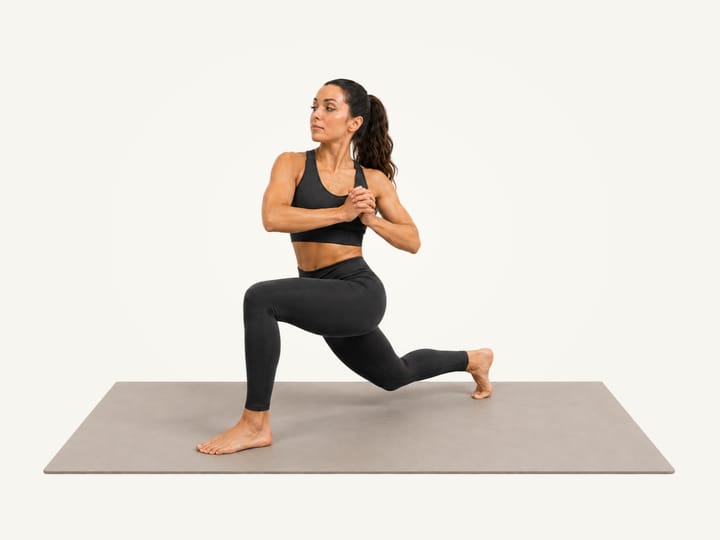
7Reverse Lunge with Rotation
30sStep back into a lunge, then rotate the torso over the front leg.
How to do it
- Stand tall with feet hip-width apart and hands clasped in front of your chest.
- Step your right foot back and bend both knees into a comfortable lunge. Keep your left foot flat, your right heel lifted and your back knee above the floor.
- Keep your legs steady and gently turn your chest and clasped hands toward your left side, over the front leg. Keep your torso tall and avoid forcing the turn.
- Turn back to centre, press through your left foot and bring the right foot forward to stand. Step the left foot back and turn toward your right front leg. Keep alternating slowly.
Why it matters
Combine a backward lunge with a controlled turn through the chest.
How it should feel
Work in the front thigh and buttock, with a comfortable turn through the trunk.
Make it easier or harder
- EasierUse a shallow lunge. Keep your hands close and make the turn smaller.
- HarderReach slightly farther. Move your clasped hands away only while balanced.
 8
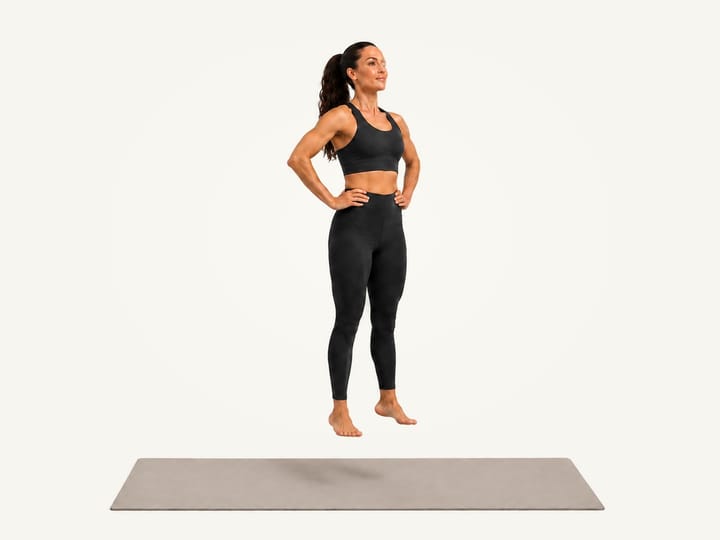
8Pogo Jumps
15sMake small, quick hops on the spot, springing through both ankles.
How to do it
- Stand tall with feet hip-width apart and both soles on the floor. Keep your knees soft and rest your hands on your hips.
- Push through the balls of both feet into a small vertical hop. Keep your trunk tall and use only a little knee bend.
- Land lightly on the balls of both feet with soft, nearly straight knees. Let your heels move naturally toward the floor and rebound into another small hop. Finish with a controlled landing and let your heels settle. Pause if you lose rhythm or control.
Why it matters
Practises a quick landing and take-off rhythm through the feet and ankles.
How it should feel
A light, springy rhythm through your calves and ankles, with little knee bend.
Make it easier or harder
- EasierUse smaller bounces. Reduce the height and keep the rhythm easy.
When to stop
Stop for sharp or increasing Achilles, ankle, shin, foot or knee pain.


Do this routine in the Prep app
Get Pre-Run Warm-Up as a guided, timed session — with every move demonstrated and adjustable to how you feel.
Download on iOS