
Upper body · 3¼ min
Overhead Shoulder Mobility
Wall slides, thread the needle and Y-T-W raises for a more comfortable reach above your head, for everyday tasks, swimming and overhead training. About three minutes.
Do this routine in the Prep app
Get Overhead Mobility as a guided, timed session — with every move demonstrated and adjustable to how you feel.
Download on iOS
 1
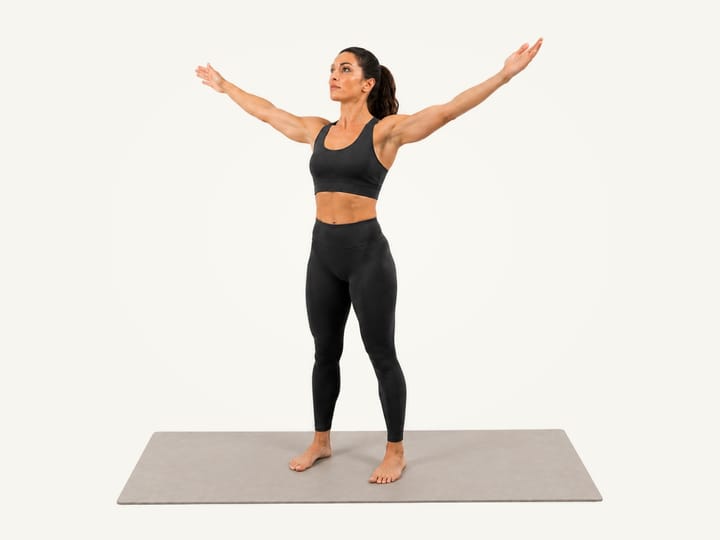
1Arm Circles
30sMake big controlled circles with the arms forward then back.
How to do it
- Stand tall with feet about shoulder-width apart. Extend both arms out to the sides at shoulder height, with elbows straight and hands relaxed.
- Begin smooth forward circles from the shoulders: move your hands forward and down, then continue around. Start small and gradually make the circles larger within a comfortable range; keep your torso steady.
- Continue the same circle by sweeping the arms back and up, then around to the front again. Reverse direction when comfortable. Keep moving smoothly, with a relaxed neck.
Why it matters
Move your shoulders through controlled circles before upper-body activity.
How it should feel
Smooth shoulder movement with gentle work in the arms and a relaxed neck.
Make it easier or harder
- EasierCircle one arm. Keep the circle small and the shoulder relaxed.
 2
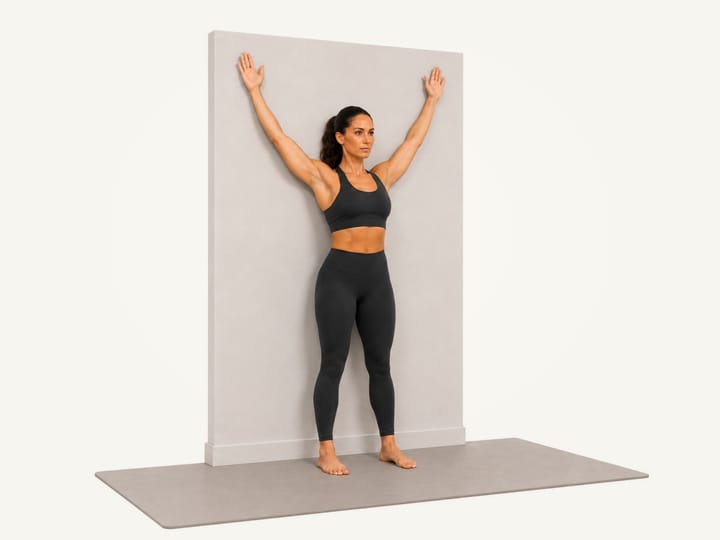
2Scapular Wall Slides
30sBack against the wall, slide arms from W to Y overhead.
How to do it
- Stand with your back comfortably against a wall, feet hip-width apart and a small step forward. Keep both feet flat and knees soft. Bend your elbows into a W, with the backs of your hands and forearms resting lightly on the wall. Keep your head neutral without forcing it back.
- Slowly slide both arms upward toward a Y while keeping easy contact with the wall. Let your shoulder blades move naturally as your arms rise, keeping your neck relaxed and ribs steady. Stop before you need to arch your back, force contact or push through pain. Lower smoothly to the W and repeat.
Why it matters
Practise raising your arms as your shoulder blades move with them.
How it should feel
Gentle work through the shoulders and upper back, with light contact against the wall.
Make it easier or harder
- EasierSlide less far. Stop at a lower, comfortable arm height.
- HarderSlow the slide. Raise and lower smoothly without adding weight.
When to stop
Stop if the arm slide causes pain; do not push through it.
 3
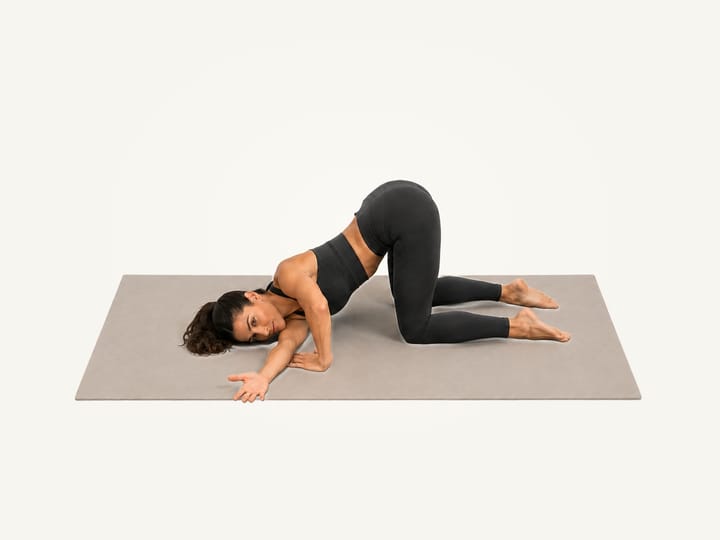
3Thread the Needle
1mFrom all fours, slide one arm underneath you and gently turn your upper back.
How to do it
- Start on all fours with your hands under your shoulders and knees under your hips.
- Keep your left palm planted. Slide your right arm beneath your left armpit, palm up, and let your upper back rotate.
- Lower your right shoulder and the side of your head onto the mat, only as far as comfortable. Keep your hips over your knees and breathe. After the hold, or at the midpoint cue in a routine, press into your left palm, return to all fours, and switch sides.
Why it matters
Explore upper-back rotation with one hand supporting you.
How it should feel
A comfortable stretch across the upper back and behind the shoulder of the threaded arm.
Make it easier or harder
- EasierSupport head and shoulder. Use a folded blanket and a shorter reach.
When to stop
Stop if the position causes neck pain or sharp pain.
 4
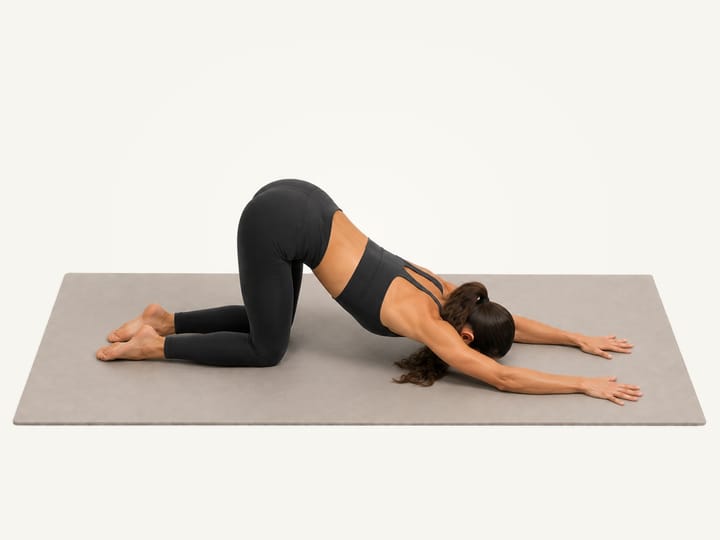
4Puppy Pose
30sKeep your hips over your knees as you walk the hands forwards and lower the chest.
How to do it
- Start on all fours with hands under shoulders and knees hip-width apart beneath your hips. Rest the tops of your feet on the mat.
- Walk your hands forward one at a time, keeping both knees grounded and your hips above them. Let your chest begin to lower between your long arms.
- Lower your chest only as far as feels comfortable and rest your forehead gently on the mat or a folded towel. Keep your hips above your knees. Breathe for the prescribed time, then ease your hips back towards your heels.
Why it matters
Explore an overhead shoulder reach with support from the floor.
How it should feel
A comfortable stretch through the shoulders, sides of the back and chest.
Make it easier or harder
- EasierSupport the forehead. Use a folded towel or block and lower the chest less.
- HarderReach a little farther. Keep the hips above the knees and neck comfortable.
When to stop
Back off if you feel pinching at the front of the shoulder.
 5
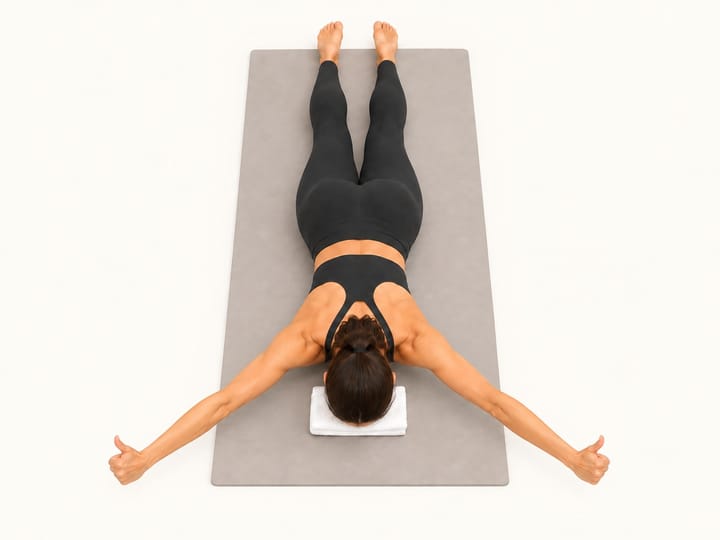
5Y-T-W Raises
45sLie face down with your head supported and lift your arms through Y, T and W shapes.
How to do it
- Lie face down with your forehead on a folded towel, chest and pelvis supported. Reach straight arms diagonally forward into a Y, thumbs up. Lift them a little, pause briefly, then lower with control.
- With your arms lowered, move them straight out to the sides at shoulder level to form a T. Keep thumbs up. Lift a little, pause briefly, then lower both arms before changing shape.
- With your arms down, bend your elbows into a W, hands beside your head. Gently squeeze your shoulder blades together and lift your arms a little. Pause, lower, then reset into Y to repeat. Keep your forehead on the towel.
Why it matters
Practise lifting the arms in three shapes while keeping the head and trunk supported.
How it should feel
Work around the shoulder blades and upper back rather than a strain in the neck.
Make it easier or harder
- EasierLift one arm. Use a smaller lift, keeping your forehead supported.
- HarderPause each lift. Hold the small lift briefly before lowering.


Do this routine in the Prep app
Get Overhead Mobility as a guided, timed session — with every move demonstrated and adjustable to how you feel.
Download on iOS