
Upper back stretches
Upper back stretches are moves for turning and arching the middle and upper back, also called thoracic mobility exercises, plus light work around the shoulder blades. Pick the movement that feels stiff, or start with the four-minute thoracic spine routine.
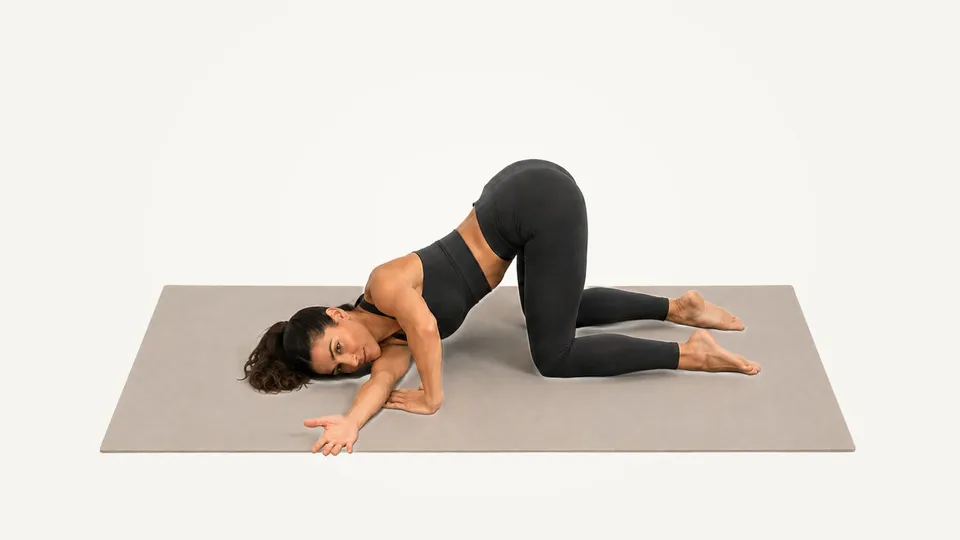
Start here
4-minute thoracic spine routine
Five moves for turning and arching the upper back. Needs a chair.
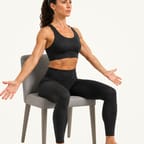
- 1Seated thoracic extension30 sec
- 2Cat-cow stretch30 sec
- 3Thread the needle stretch1 min
- 4Puppy pose30 sec
- 5Seated spinal twist1 min
The moves
Upper back stretches, by the movement that feels stiff.
The times shown are Prep's default for each move.
Turning the upper back
Thoracic rotation exercises
For turning through the upper back, from all fours, sitting or in a lunge.






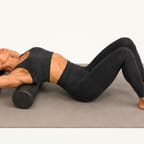
Arching the upper back
Thoracic extension exercises
For bending the upper back gently backwards with support, and for rounding and arching the whole spine.





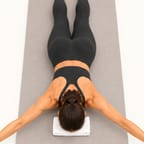
Around the shoulder blades
Upper back exercises for posture
Light work for the muscles around the shoulder blades, lying face down, sitting or with your back to a wall.



Safety
Move within a comfortable range and keep your neck relaxed. Stop if a move causes back or neck pain, pinching at the front of the shoulder, tingling or numbness. Prep does not diagnose or treat; if something hurts, see a qualified clinician.
Routines
Upper back mobility routines.
Each one has a free step-by-step guide here, and plays as a timed, guided session in Prep.


Keep going in Prep
A short weekly plan for your upper back.
Prep times each hold, tells you when to switch sides and plans a short week around the areas you pick.

Questions
Upper back mobility questions.
Which upper back stretch should I start with?
If turning feels stiff, start with thread the needle. If arching feels stiff, start with seated thoracic extension. The four-minute thoracic spine routine does both.
How long should an upper back mobility routine take?
The upper back routines on this page run from about 3 to 4 minutes. The Thoracic Spine routine at the top takes about four, and most single moves take 30 seconds to a minute.
How long should I hold an upper back stretch?
The times on this page are Prep's defaults: 30 seconds for most moves, done on each side for one-sided moves, and 45 seconds for the world's greatest stretch and Y-T-W raises.
How often should I do thoracic mobility exercises?
Little and often is easier to keep up than one long session. Prep plans start at three short sessions a week, and the four-minute routine fits on most days.
Do I need any equipment?
Most of these moves need only floor space. Seated thoracic extension and Brugger relief use a firm chair, wall slides use a wall, and the foam roller thoracic extension uses a foam roller.
Can I do these exercises sitting down?
Some of them. Seated thoracic extension and Brugger relief are done on a firm chair, and the seated spinal twist is done sitting on a mat. The free desk stretches routine includes both chair moves, for a short break at your desk.
What should an upper back stretch feel like?
A comfortable stretch without pinching or neck strain. In thread the needle you should feel it across the upper back and behind the shoulder of the threaded arm; in seated thoracic extension, around the middle or upper back.
How can I check my upper back and shoulder mobility?
Try the overhead reach test: stand with your back against a wall and see whether each arm reaches the wall above your head without your lower back arching. Your shoulders and upper back both play a part.
Give your upper back four minutes.
Download Prep for guided upper back routines and a plan around the areas you pick.