
Evening · 2½ min
Sleep Wind-Down Stretches
Close the day with child's pose, happy baby and legs up the wall, then a few slow breaths. About three minutes of unhurried movement.
Do this routine in the Prep app
Get Sleep Wind-Down as a guided, timed session — with every move demonstrated and adjustable to how you feel.
Download on iOS
 1
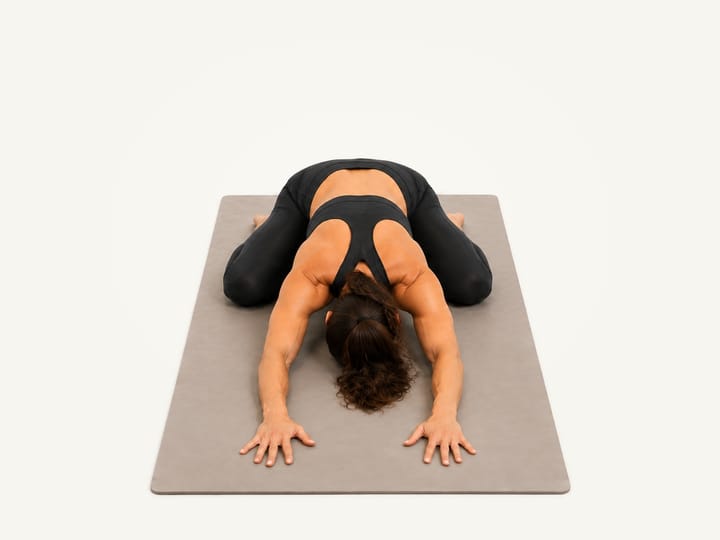
1Child's Pose
30sEase your hips towards your heels and reach your arms forwards from kneeling.
How to do it
- Start on your hands and knees. Bring your big toes together, keep the tops of your feet down, and separate your knees comfortably.
- Ease your hips back towards your heels as you walk your hands forward and lower your torso between your thighs.
- Rest your forehead on the mat with your arms long and palms down. Keep your neck relaxed and breathe slowly for the prescribed time. Use a folded blanket under your forehead if needed.
Why it matters
Take a supported pause with your arms reaching and your hips resting back.
How it should feel
A broad, comfortable stretch through the back, sides and shoulders.
Make it easier or harder
- EasierAdd support. Use a folded blanket under the forehead or between hips and heels.
When to stop
Stop if you feel sharp pain.
 2
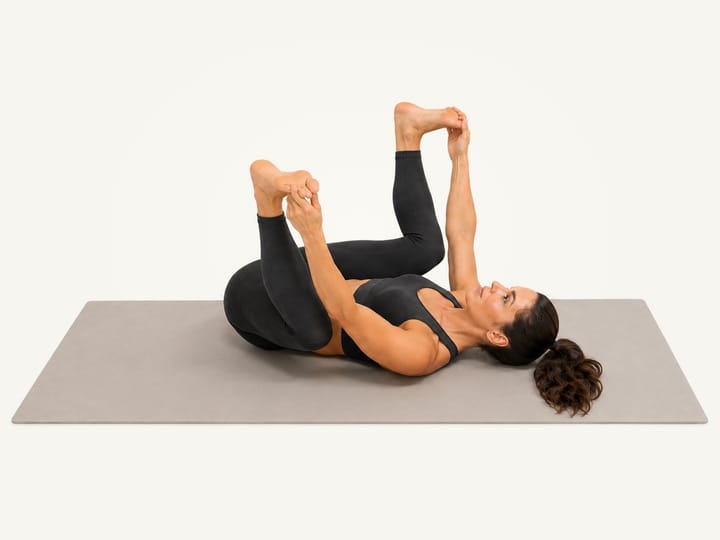
2Happy Baby
30sLie on your back with knees open and support your feet or shins.
How to do it
- Lie on your back and draw both knees towards your chest. Rest your hands on your shins and keep your head and shoulders supported.
- Open your knees comfortably towards your armpits, supporting your shins. Raise your feet so your ankles are above your knees and your soles face upward.
- Reach inside your knees to hold the outside edges of your feet, or keep holding your shins. Let your head, shoulders and tailbone rest comfortably on the mat. Breathe slowly for the prescribed time without pulling hard.
- Optional: keep holding your feet or shins and gently rock a little from side to side. Keep your head supported and your back relaxed. Use small, comfortable movements, or remain still for the rest of the stretch.
Why it matters
Explore hip opening while the floor supports your back and shoulders.
How it should feel
A broad, gentle stretch through the inner hips and groin.
Make it easier or harder
- EasierHold the thighs or shins. Bring the support closer rather than reaching for the feet.
 3
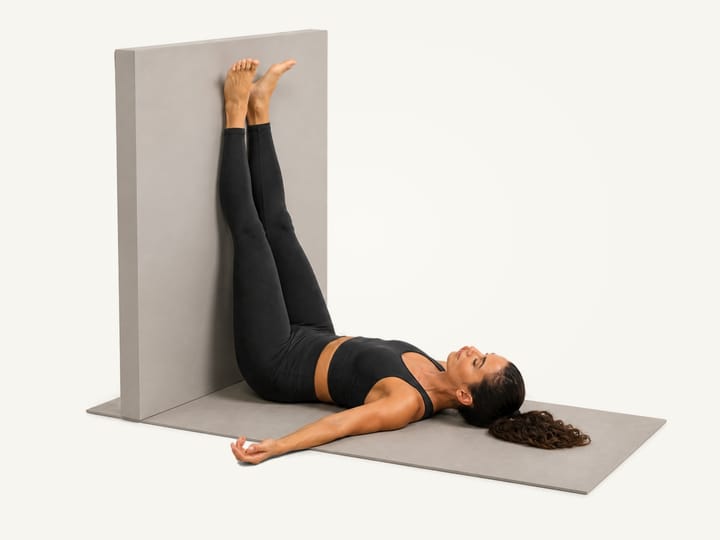
3Legs Up the Wall
30sLie back and let the wall support your legs in a comfortable resting position.
How to do it
- Place a mat beside a wall and sit side-on near it with your knees bent. Leave enough space to lie down comfortably; your hips do not need to touch the wall.
- Lower onto your side, then roll onto your back as you bring your feet to the wall. Keep your knees bent while you settle your head, back and pelvis on the mat. Adjust farther from the wall if needed.
- Gradually lengthen your legs up the wall without locking your knees. Let the wall support your legs and rest your arms beside you. Breathe slowly and comfortably. To finish, bend your knees, roll onto your side and pause before pushing up to sit.
Why it matters
Take a supported resting pause with a gentle stretch through the backs of the legs.
How it should feel
A relaxed position with no more than a light stretch behind the legs.
Make it easier or harder
- EasierMove away from the wall. Soften your knees and use a thin head pillow if helpful.
When to stop
Come out slowly if you feel pain, dizziness or tingling that does not settle.
 4
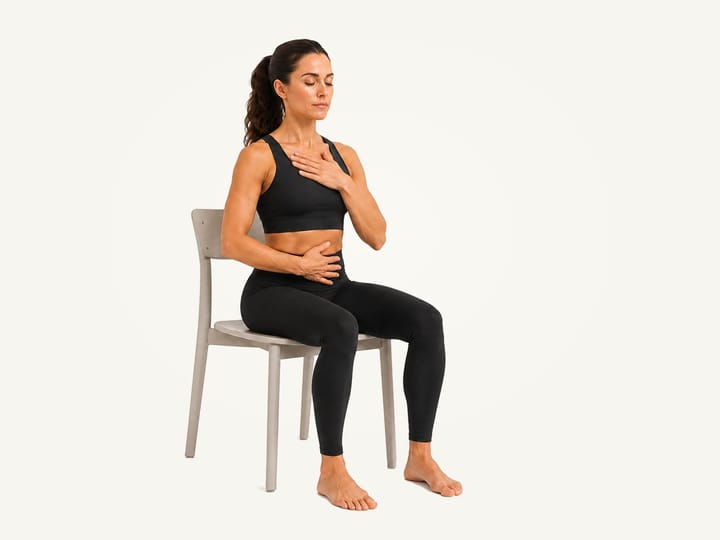
4Diaphragmatic Breathing
1mNotice the belly rise and fall during relaxed breathing.
How to do it
- Sit comfortably with your feet on the floor, or lie with your head and knees supported. Place one hand on your upper chest and one on your belly just below the ribs.
- Breathe in gently through your nose. Allow your belly hand to rise while your upper chest stays relatively quiet.
- Breathe out gently through your nose and let the belly hand settle back. Keep your shoulders and jaw relaxed.
- Continue a comfortable, steady rhythm for the remaining time. Avoid forcing large breaths.
Why it matters
Notice gentle belly movement as you practise relaxed breathing.
How it should feel
The belly rising and falling gently, with a relaxed neck and shoulders.
Make it easier or harder
- EasierLie with knees bent. Support your head and let the shoulders rest.
When to stop
Stop and return to natural breathing if you feel dizzy, light-headed or uncomfortable.


Do this routine in the Prep app
Get Sleep Wind-Down as a guided, timed session — with every move demonstrated and adjustable to how you feel.
Download on iOS