
Running · 2 min · Plyometric foundations
Plyometric Warm-Up for Runners
Pogo jumps, line hops and controlled landings to wake up springy ankles before you run. About two minutes, for runners already comfortable with hopping.
Do this routine in the Prep app
Get Plyometric Warm-Up as a guided, timed session — with every move demonstrated and adjustable to how you feel.
Download on iOS
 1
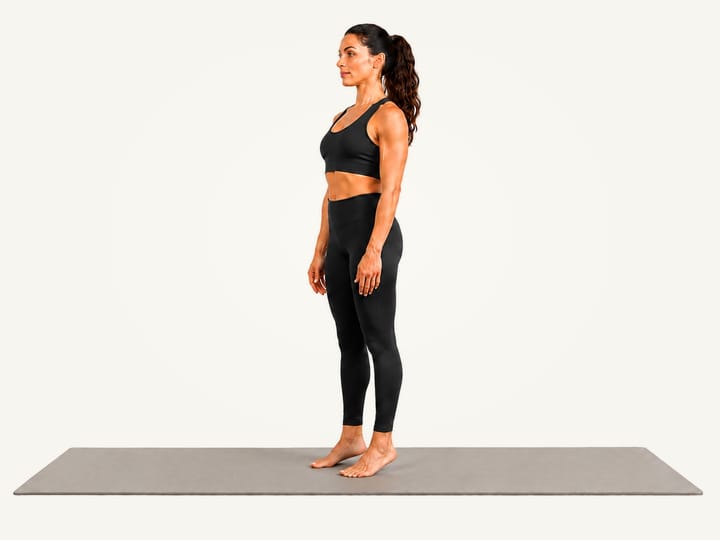
1Heel-to-Toe Rocks
30sRock smoothly from heels to toes to wake up the ankles and lower legs.
How to do it
- Stand tall with feet hip-width apart and both soles flat. Keep your knees soft and use a stable wall or secured chair if needed for balance.
- Slowly lift both heels a small amount while the balls of the feet and toes stay grounded. Keep your torso upright, then lower both heels fully to the mat.
- With both heels grounded, gently lift both forefeet and toes toward your shins. Lower your feet flat, then repeat the heel-to-toe sequence smoothly without bouncing or swaying.
Why it matters
Practise lifting the heels and forefeet in turn while keeping your trunk steady.
How it should feel
Alternating work through the calves and front of the shins as the feet move.
Make it easier or harder
- EasierMake the lifts smaller. Hold a wall or secured chair for balance.
- HarderSlow each lowering. Set the feet down gently between directions.
 2
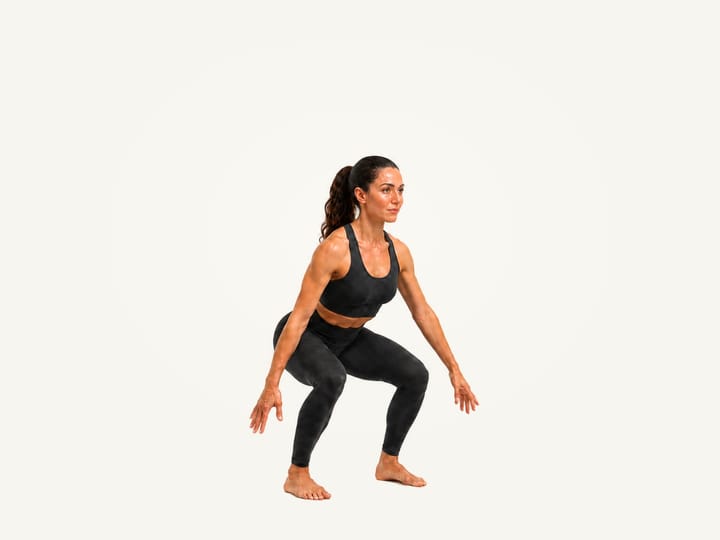
2Snap-Down to Stick
30sMove from tall standing into a shallow, steady squat position.
How to do it
- Stand with feet comfortably apart and lift both arms overhead. Keep your heels on the floor and your trunk upright.
- Sweep your arms down as you move briskly into a shallow squat with your hips back. Let both feet share your weight, keep your chest lifted and let your knees follow your toes; no jump is needed. Hold still for about two seconds, then stand and reset.
Why it matters
Practises the controlled stopping position used in jump-and-land drills.
How it should feel
Balanced pressure through both feet with your thighs and hips controlling the stop.
Make it easier or harder
- EasierLower more slowly. Start with both heels down and find the position.
- HarderStart on tiptoes. Snap down a little faster with the same control.
When to stop
Stop for sharp knee, ankle, Achilles or back pain, or if you cannot control the landing.
 3
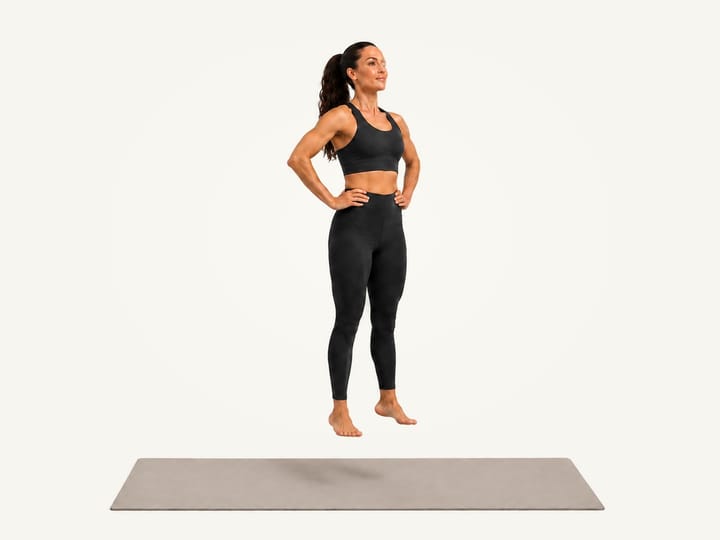
3Pogo Jumps
20sMake small, quick hops on the spot, springing through both ankles.
How to do it
- Stand tall with feet hip-width apart and both soles on the floor. Keep your knees soft and rest your hands on your hips.
- Push through the balls of both feet into a small vertical hop. Keep your trunk tall and use only a little knee bend.
- Land lightly on the balls of both feet with soft, nearly straight knees. Let your heels move naturally toward the floor and rebound into another small hop. Finish with a controlled landing and let your heels settle. Pause if you lose rhythm or control.
Why it matters
Practises a quick landing and take-off rhythm through the feet and ankles.
How it should feel
A light, springy rhythm through your calves and ankles, with little knee bend.
Make it easier or harder
- EasierUse smaller bounces. Reduce the height and keep the rhythm easy.
When to stop
Stop for sharp or increasing Achilles, ankle, shin, foot or knee pain.
 4
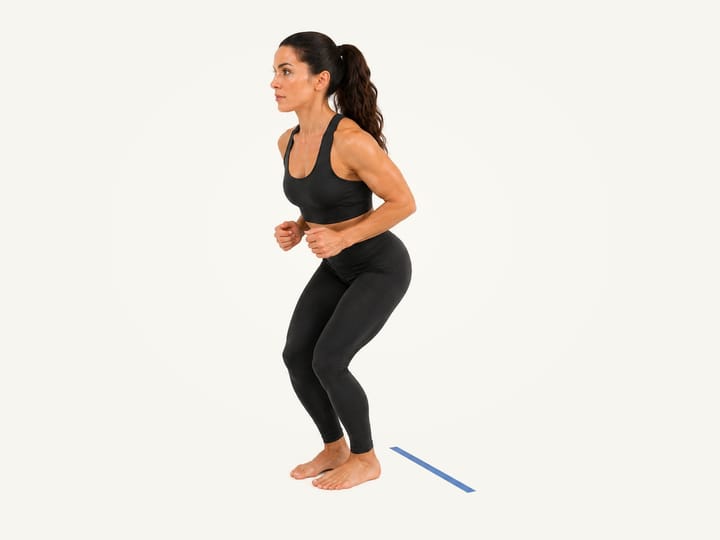
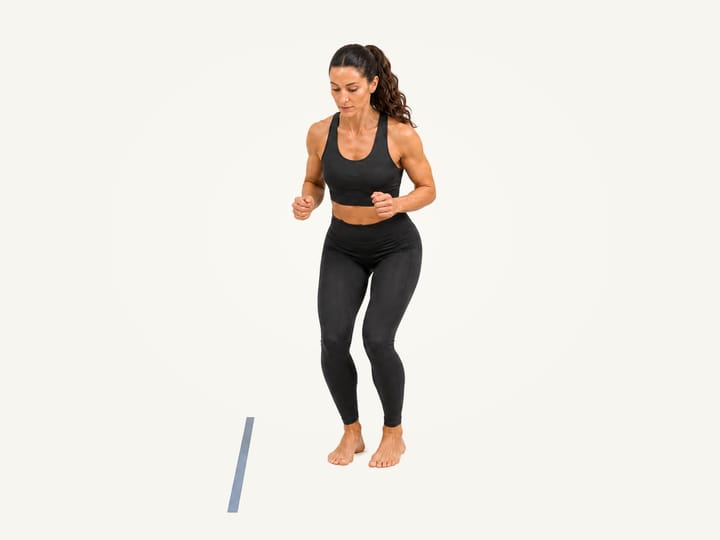
4Forward-Back Line Hops
20sMake small two-foot hops forwards and backwards across a line.
How to do it
- Stand with feet close and parallel, knees soft, just behind a line or an imagined line on clear, non-slip floor.
- Make a low, small hop forward across the line with both feet moving together. Keep the trunk steady.
- Land softly on both feet with knees tracking over the toes, then make a small hop back across the line. Continue forward and back at a controlled rhythm, or pause between hops. Finish settled on both feet.
Why it matters
Practises repeated ankle-driven hops with a small forward-and-back direction change.
How it should feel
Quick work through the calves and ankles while your trunk stays controlled.
Make it easier or harder
- EasierStep across the line. Or pause fully between small hops.
- HarderQuicken the rhythm slightly. Keep the distance and landing quality the same.
When to stop
Stop for sharp or increasing lower-leg or joint pain, or if balance deteriorates.
 5
5Lateral Line Hops
20sMake small two-foot hops from side to side across a line.
How to do it
- Stand with feet close and parallel, knees soft, beside a line or an imagined line on clear, non-slip floor.
- Make a low, small hop sideways across the line, moving both feet together. Keep the hips level and trunk steady.
- Land softly on both feet with knees following the toes, then make a small hop back across the line. Keep feet parallel and crossings close to the line. Continue at a controlled rhythm, pausing if needed, and finish settled on both feet.
Why it matters
Practises placing both feet accurately during small sideways hops.
How it should feel
Effort through the ankles and feet with little upper-body sway.
Make it easier or harder
- EasierStep from side to side. Or settle completely between each hop.
- HarderQuicken the rhythm slightly. Keep the same small distance and control.
When to stop
Stop for sharp ankle, knee, foot, shin or Achilles pain, or repeated loss of balance.


Do this routine in the Prep app
Get Plyometric Warm-Up as a guided, timed session — with every move demonstrated and adjustable to how you feel.
Download on iOS