
Posture · 3 min
Posture Exercises to Undo Desk Slouch
A quick set of posture exercises to counter desk slouch and reset how you sit and stand. About three minutes to open the chest, wake the upper back and stand taller.
Do this routine in the Prep app
Get Posture Reset as a guided, timed session — with every move demonstrated and adjustable to how you feel.
Download on iOS
 1
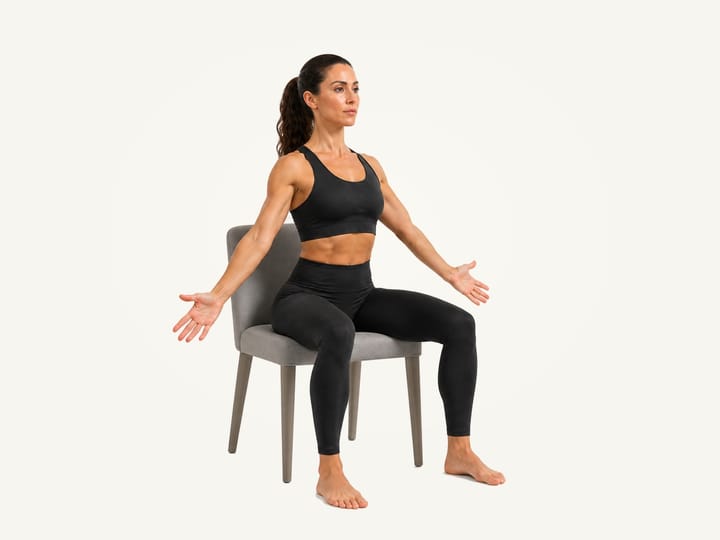
1Brugger Relief
30sSit forward, palms out, squeeze the shoulder blades together.
How to do it
- Sit near the front of a stable chair with both feet flat and comfortably apart. Rest your hands on your thighs, lengthen your spine and keep your gaze level.
- Turn your palms forward and open your arms low beside you. Gently draw the shoulder blades down and together, keeping your chin slightly tucked. Breathe easily during a brief, comfortable hold.
- Let your arms relax beside the chair with palms facing inward. Keep both feet grounded, then repeat the opening and release when ready.
Why it matters
Change your seated position with a gentle arm opening and release.
How it should feel
A comfortable opening across the chest and light work through the upper back.
Make it easier or harder
- EasierSit with support. Rest farther back in the chair and reduce the arm opening.
 2
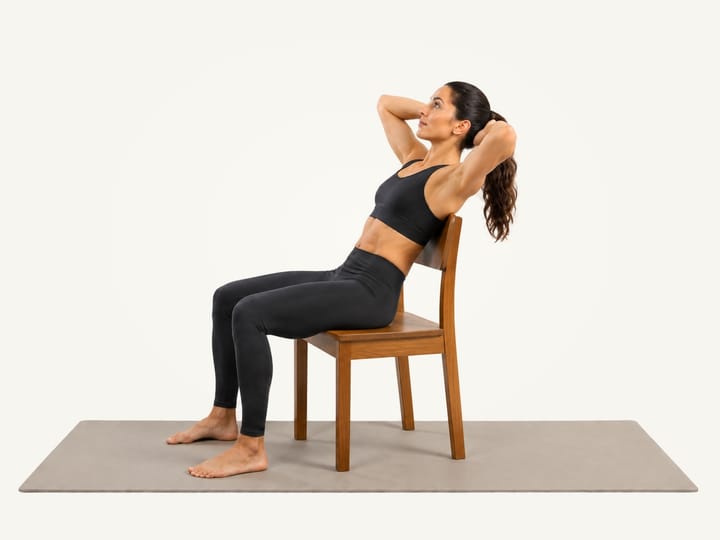
2Seated Thoracic Extension
30sSupport your head and gently extend your upper back over a firm chair back.
How to do it
- Sit on a sturdy chair with a firm back and no wheels. Keep both feet flat, knees comfortably bent and your hips supported on the seat. Choose a chair back that supports your mid-back.
- Sit tall and place both hands behind your head, with elbows comfortably open. Let your hands support your head without pulling it. Keep your feet and pelvis steady.
- Slowly lean your upper back over the chair back within a comfortable range. Keep your head supported and avoid forcing your neck or lower back. Breathe comfortably, then return upright with control before repeating.
Why it matters
Explore a supported backward bend through your middle and upper back.
How it should feel
A comfortable stretch around the mid or upper back while your feet and pelvis stay supported.
Make it easier or harder
- EasierUse a smaller lean. Cross your arms if holding the head is uncomfortable.
When to stop
Stop if this causes back or neck pain.
 3
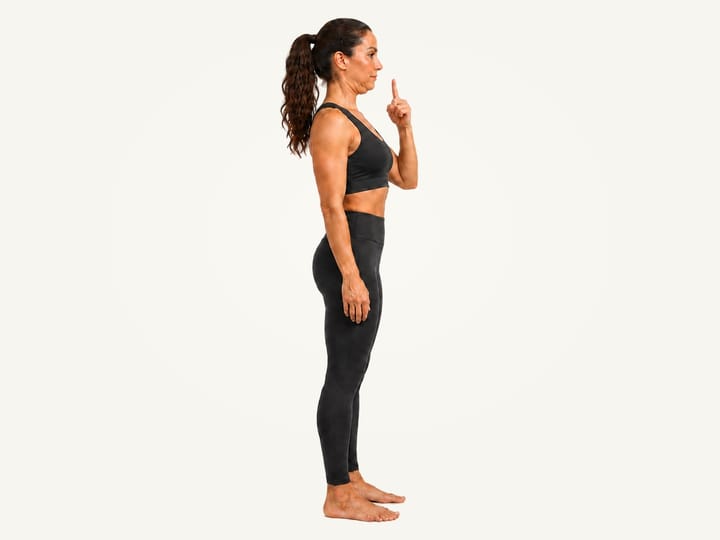
3Chin Tucks
30sDraw the chin straight back without tilting the head.
How to do it
- Stand tall with your feet comfortably apart and shoulders relaxed. Lightly touch one index finger to your chin without pressing.
- Hold your finger still and gently draw your chin straight back, leaving a small gap from the fingertip. Keep your eyes level and hold for 2–3 seconds without tilting your head.
- Relax back to a neutral head position and lower your hand. Repeat the same gentle chin glide for the prescribed time, or finish when you are ready, using your finger as a guide if helpful.
Why it matters
Practise drawing your head back with control while your shoulders stay relaxed.
How it should feel
A small glide of the head, with gentle work around the neck and possibly a light stretch at the back.
Make it easier or harder
- EasierSit with support. Rest against a chair and use a smaller chin glide.
When to stop
Stop if the movement is painful.
 4
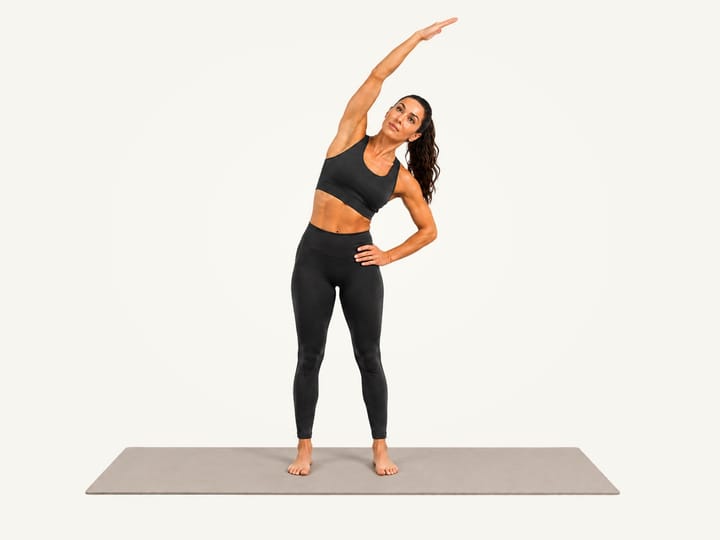
4Side Bend
45sReach one arm up and gently lean to the opposite side.
How to do it
- Stand tall with your feet hip-width apart and arms relaxed by your sides. Keep both feet flat and face forward.
- Raise the right arm overhead and rest the left hand on your hip. Lean gently left without twisting, with both feet grounded. Hold and breathe comfortably.
- Return upright and lower the arm before changing sides. Raise the left arm and lean gently right with the right hand on your hip. Return upright to finish.
Why it matters
Explore a side bend through the torso while keeping a steady standing base.
How it should feel
A mild stretch from the side of the hip through the ribs and shoulder.
Make it easier or harder
- EasierKeep the arm lower. Use a smaller side bend.
- HarderTry a crossed-foot stance. Cross the stretching-side foot behind only while both feet stay stable.
 5
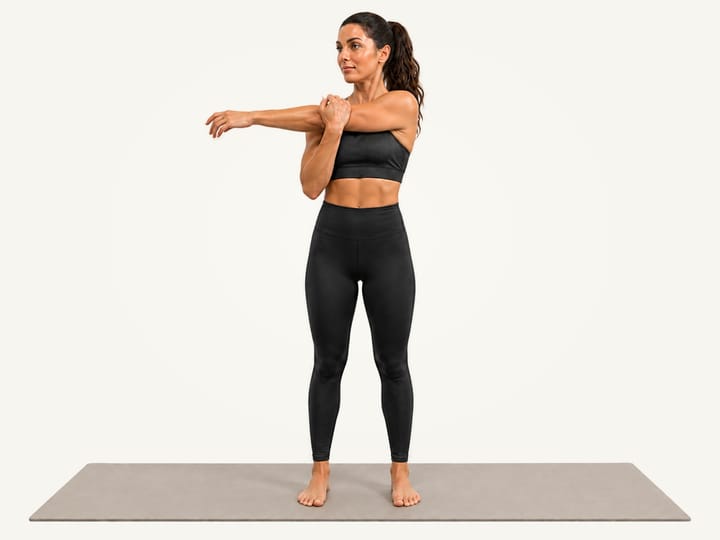
5Cross-Body Shoulder
45sBring one arm across your chest and support it gently above the elbow.
How to do it
- Stand tall with your feet comfortably apart and shoulders relaxed.
- Bring your left arm across your chest around shoulder height. Place your right hand on the left upper arm, above the elbow, and gently draw it closer without pressing on the elbow joint. Keep both shoulders relaxed and breathe. After the hold, or at the side-switch cue in a routine, release and lower your arms, then repeat with the right arm across your chest for the prescribed time.
Why it matters
Stretch the back of the shoulder with a supported reach across the body.
How it should feel
A gentle stretch behind the shoulder of the arm across your body.
Make it easier or harder
- EasierUse a lighter pull. Bring the arm across less, standing or sitting tall.
- HarderDraw the arm closer. Keep the pressure gentle and shoulder relaxed.
When to stop
Ease out if the shoulder pinches.


Do this routine in the Prep app
Get Posture Reset as a guided, timed session — with every move demonstrated and adjustable to how you feel.
Download on iOS