
T-spine · 3½ min
Thoracic Spine Mobility Exercises
Unlock a stiff upper back with thoracic spine mobility drills. About four minutes to improve rotation and extension for better posture, pressing and running form.
Do this routine in the Prep app
Get Thoracic Spine as a guided, timed session — with every move demonstrated and adjustable to how you feel.
Download on iOS
 1
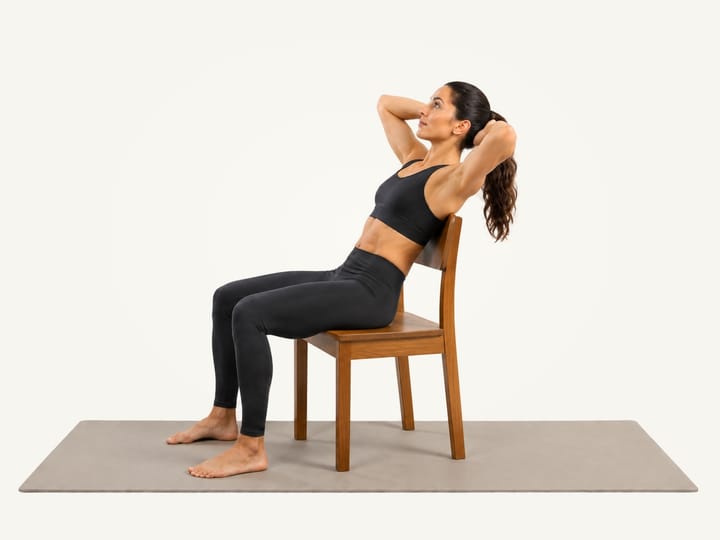
1Seated Thoracic Extension
30sSupport your head and gently extend your upper back over a firm chair back.
How to do it
- Sit on a sturdy chair with a firm back and no wheels. Keep both feet flat, knees comfortably bent and your hips supported on the seat. Choose a chair back that supports your mid-back.
- Sit tall and place both hands behind your head, with elbows comfortably open. Let your hands support your head without pulling it. Keep your feet and pelvis steady.
- Slowly lean your upper back over the chair back within a comfortable range. Keep your head supported and avoid forcing your neck or lower back. Breathe comfortably, then return upright with control before repeating.
Why it matters
Explore a supported backward bend through your middle and upper back.
How it should feel
A comfortable stretch around the mid or upper back while your feet and pelvis stay supported.
Make it easier or harder
- EasierUse a smaller lean. Cross your arms if holding the head is uncomfortable.
When to stop
Stop if this causes back or neck pain.
 2
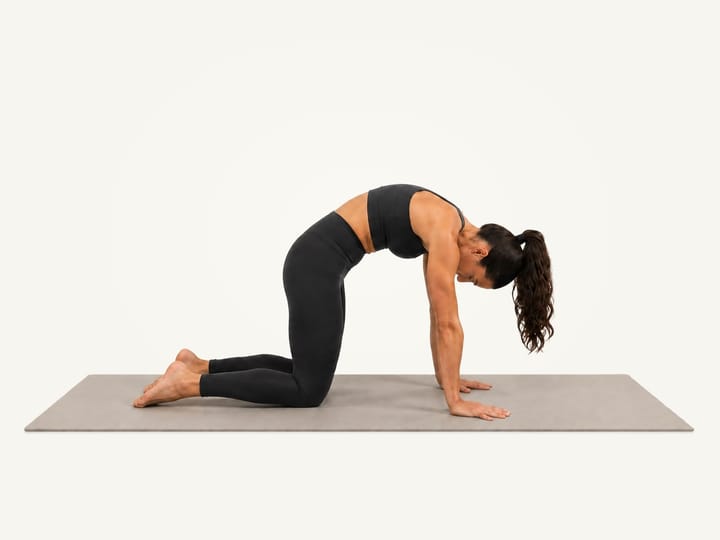
2Cat-Cow
30sOn all fours, alternate arching and rounding the spine.
How to do it
- Start on all fours, hands under shoulders and knees under hips, with fingers spread. Inhale and gently lower your belly while lifting your chest and tailbone. Keep your neck long and look slightly ahead.
- Exhale, press into your palms and round your back, tucking your tailbone and letting your chin lower gently. Keep flowing between cow and cat with your breath for the prescribed time, or finish when you are ready.
Why it matters
Explore gentle rounding and arching through your spine.
How it should feel
A gentle change between rounding and arching along your back, without forcing the neck or lower back.
Make it easier or harder
- EasierTry it seated. Sit with hands on your knees and make a smaller round and arch.
When to stop
Stop if the movement causes pain.
 3
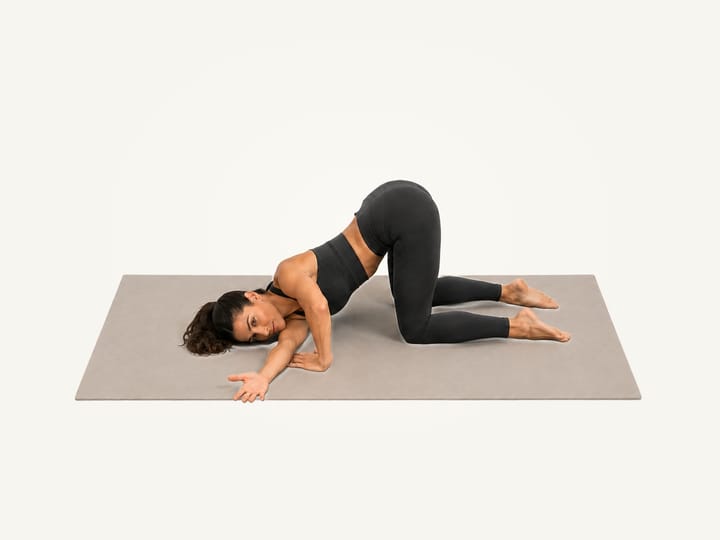
3Thread the Needle
1mFrom all fours, slide one arm underneath you and gently turn your upper back.
How to do it
- Start on all fours with your hands under your shoulders and knees under your hips.
- Keep your left palm planted. Slide your right arm beneath your left armpit, palm up, and let your upper back rotate.
- Lower your right shoulder and the side of your head onto the mat, only as far as comfortable. Keep your hips over your knees and breathe. After the hold, or at the midpoint cue in a routine, press into your left palm, return to all fours, and switch sides.
Why it matters
Explore upper-back rotation with one hand supporting you.
How it should feel
A comfortable stretch across the upper back and behind the shoulder of the threaded arm.
Make it easier or harder
- EasierSupport head and shoulder. Use a folded blanket and a shorter reach.
When to stop
Stop if the position causes neck pain or sharp pain.
 4
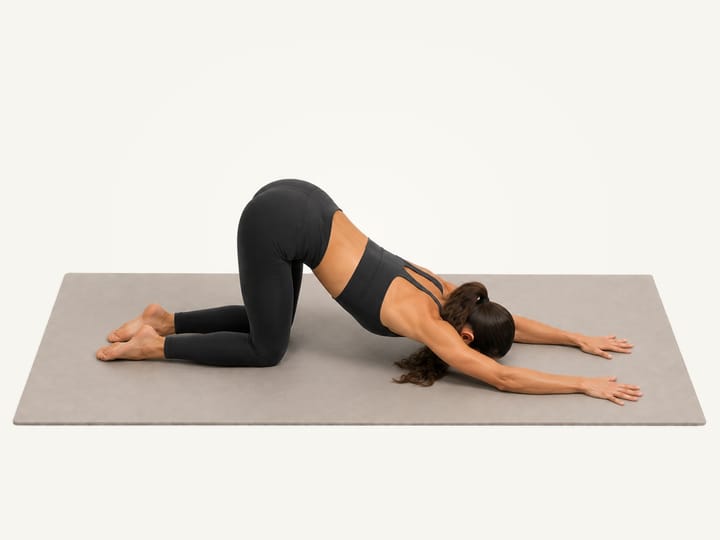
4Puppy Pose
30sKeep your hips over your knees as you walk the hands forwards and lower the chest.
How to do it
- Start on all fours with hands under shoulders and knees hip-width apart beneath your hips. Rest the tops of your feet on the mat.
- Walk your hands forward one at a time, keeping both knees grounded and your hips above them. Let your chest begin to lower between your long arms.
- Lower your chest only as far as feels comfortable and rest your forehead gently on the mat or a folded towel. Keep your hips above your knees. Breathe for the prescribed time, then ease your hips back towards your heels.
Why it matters
Explore an overhead shoulder reach with support from the floor.
How it should feel
A comfortable stretch through the shoulders, sides of the back and chest.
Make it easier or harder
- EasierSupport the forehead. Use a folded towel or block and lower the chest less.
- HarderReach a little farther. Keep the hips above the knees and neck comfortable.
When to stop
Back off if you feel pinching at the front of the shoulder.
 5
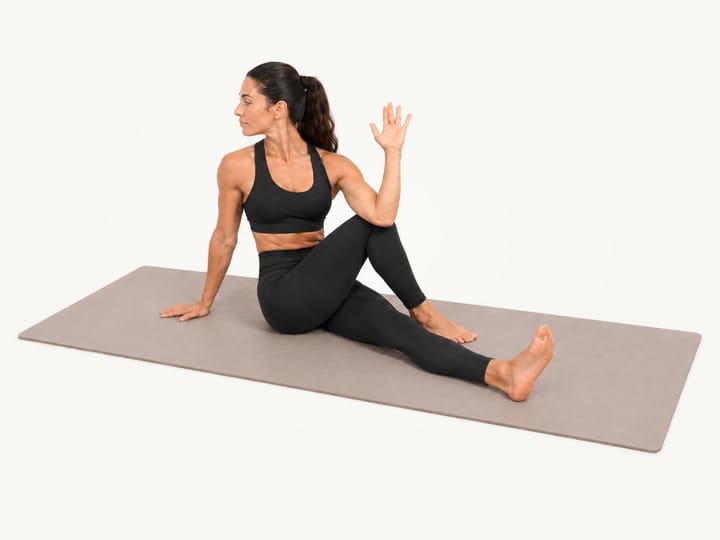
5Seated Spinal Twist
1mSit tall, cross one foot outside the opposite knee and turn your chest and gaze towards it.
How to do it
- Sit on the mat with both legs extended in front of you. Rest your hands on the mat beside or just behind your hips and lengthen your back without leaning far back.
- Bend your right knee and place that foot across your left leg, flat on the mat outside your left knee. Keep your left leg extended and your hips resting on the mat. Use your hands beside or behind your hips for support and sit tall before turning.
- Keep your right hand behind you for support and rest your left hand or forearm lightly against the outside of your bent right knee. Sit tall and gently rotate your chest to the right, letting your head and eyes follow over your right shoulder as far as comfortable. Keep both hips grounded. Hold this position and breathe steadily until the side-switch cue; do not force the turn.
- At the side-switch cue, slowly bring your head and chest back to centre before uncrossing your legs. Cross your left foot outside your right knee, keeping the right leg extended. Place your left hand behind you and rest your right hand or forearm lightly against the outside of your bent left knee. Sit tall, turn your chest left and let your gaze follow over your left shoulder as far as comfortable. Hold and breathe steadily for the remaining time, then unwind before uncrossing.
Why it matters
Practise a comfortable torso turn while your seat and hand provide support.
How it should feel
A gentle stretch around the torso and outer hip.
Make it easier or harder
- EasierReduce the turn. Sit on a folded blanket or keep both legs extended.
- HarderExplore a little more turn. Keep breathing easily without pulling on the knee.
When to stop
Stop if the twist causes back pain; do not force the turn.


Do this routine in the Prep app
Get Thoracic Spine as a guided, timed session — with every move demonstrated and adjustable to how you feel.
Download on iOS