
Chin tucks
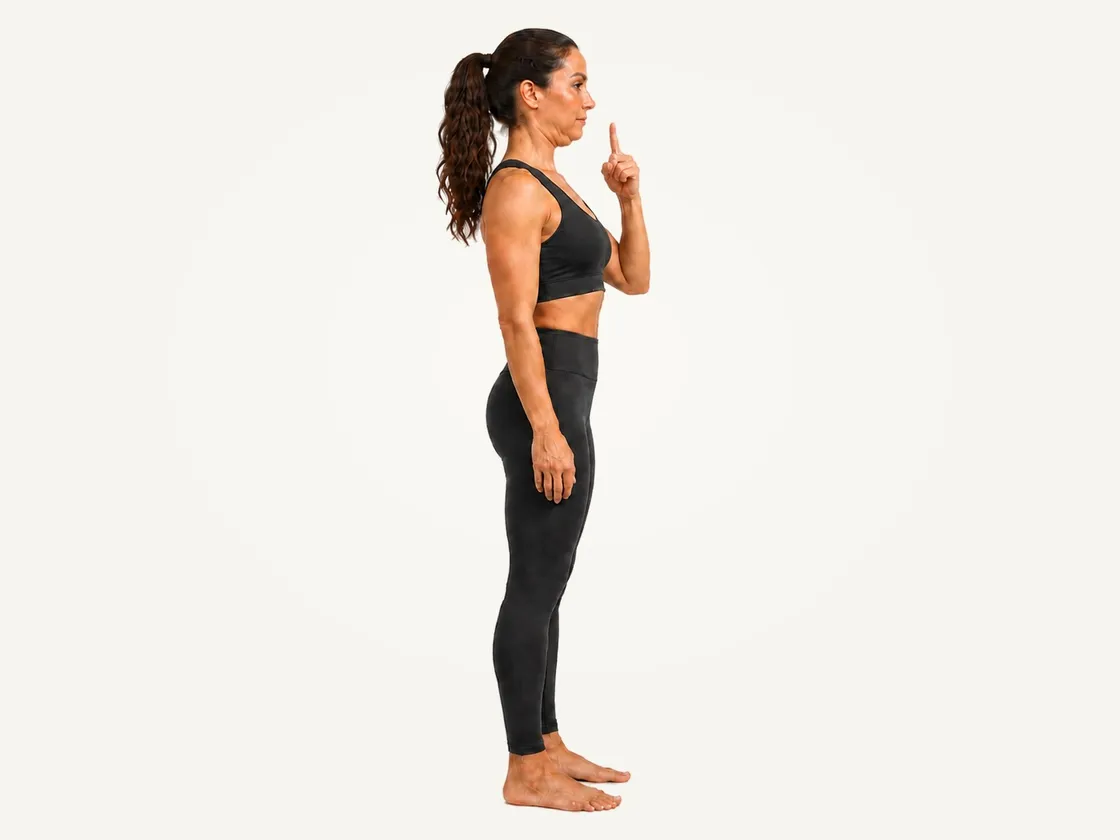
Chin tucks are a small neck exercise: you draw your chin straight back without tilting your head, then relax. They give the neck gentle work, with a possible light stretch at the back. Use them during a desk break or on waking.
Also called chin retractions or neck retractions.
- Works
- Neck
- Time
- About 30 sec
- Kit
- None
- Intensity
- 1 of 5 on Prep's scale
How to do it
How to do chin tucks.
Repeat slowly for about 30 seconds, holding each tuck for 2 to 3 seconds. The movement is small and gentle.
Stand tall
Stand tall with your feet comfortably apart and shoulders relaxed. Lightly touch one index finger to your chin without pressing.
Glide the chin back
Hold your finger still and gently draw your chin straight back, leaving a small gap from the fingertip. Keep your eyes level and hold for 2–3 seconds without tilting your head.
Release and repeat
Relax back to a neutral head position and lower your hand. Repeat the same gentle chin glide, or finish when you are ready, using your finger as a guide if helpful.
Form
Chin tucks form.
A small glide of the head, with gentle work around the neck and possibly a light stretch at the back.
Keep
- Keep your eyes levelSlide back without nodding down.
- Relax your shouldersKeep them still as your head moves.
- Use your finger lightlyIt is a guide, not a force on your chin.
Common mistakes
- Pushing with the finger
- Straining for a bigger tuckThe movement is small and gentle.
- Easier version
- Sit with supportRest against a chair and use a smaller chin glide.
- When to stop
- Stop if the movement is painful.If the exercise causes pain, seek advice from a physiotherapist or GP.
Questions
Chin tucks questions.
What do chin tucks work?
Chin tucks work the neck, practising control as you draw your head back.
What are chin tucks good for?
Prep uses chin tucks for head and neck control, during a desk break or on waking.
How long should you do chin tucks?
Repeat slowly for about 30 seconds, holding each tuck for 2 to 3 seconds. The movement is small and gentle.
How do you make chin tucks easier?
Sit with support. Rest against a chair and use a smaller chin glide.
When should you stop chin tucks?
Stop if the movement is painful. If the exercise causes pain, seek advice from a physiotherapist or GP.
Alternatives
Chin tucks alternatives.
Similar moves


In these routines


Do it timed, in your plan.
Prep times it for you and plans your week around the areas you choose.