
Tibialis raises
Tibialis raises are a standing exercise for the shins: with your back against a wall, you lift your toes and forefeet towards your shins while your heels stay down, then lower with control. Use them in a conditioning session or for activation work.
Also called tib raises or toe raises.
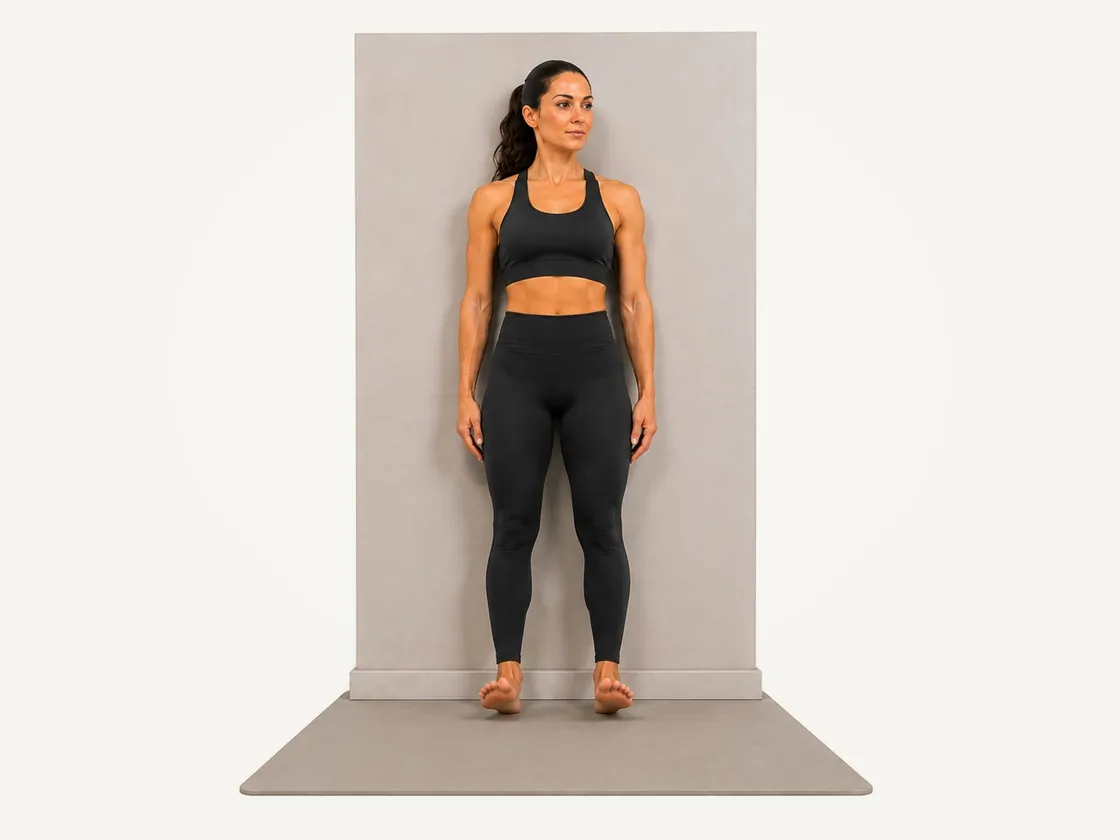
- Works
- Shins; also ankles
- Time
- About 30 sec
- Kit
- A wall
- Intensity
- 2 of 5 on Prep's scale
How to do it
How to do tibialis raises.
Lift and lower for about 30 seconds. Keep your heels on the floor and control the lowering.
Set against the wall
Stand with your back supported by a wall and your feet hip-width apart, a little in front of you. Keep both feet flat, your knees softly unlocked and your arms relaxed.
Lift toes and lower
Keep both heels on the floor as you lift your toes and forefeet toward your shins within a comfortable range. Pause briefly, then lower with control. Repeat smoothly for your chosen repetitions.
Form
Tibialis raises form.
Effort along the fronts of your shins.
Keep
- Keep the heels grounded
- Lift within a comfortable rangeLower the forefeet smoothly.
- Keep the knees softly unlocked
Common mistakes
- Rocking onto the heelsKeep the body supported by the wall.
- Dropping the feet downControl the lowering phase.
- Easier version
- Make the lift smallerUse less range and reset as needed.
- Harder version
- Move feet slightly forwardKeep both heels down and your back supported.
- When to stop
- Stop for sharp pain or increasing shin or ankle pain.Seek advice if shin or ankle symptoms remain worse after the exercise.
Questions
Tibialis raises questions.
What do tibialis raises work?
Tibialis raises work the shins, and also the ankles.
What are tibialis raises good for?
Prep uses tibialis raises for forefoot lifting strength, during a conditioning session or for activation work.
How long should you do tibialis raises?
Lift and lower for about 30 seconds. Keep your heels on the floor and control the lowering.
How do you make tibialis raises easier?
Make the lift smaller. Use less range and reset as needed.
When should you stop tibialis raises?
Stop for sharp pain or increasing shin or ankle pain. Seek advice if shin or ankle symptoms remain worse after the exercise.
Alternatives
Tibialis raises alternatives.
Similar moves


More ankle exercises

Do it timed, in your plan.
Prep times it for you, shows the demo clip and plans your week around the areas you choose.