
Hips · 3¾ min
Hip Mobility Exercises
Open up stiff hips with a short mobility routine covering your hip flexors, rotators and glutes. About four minutes, and great for runners, lifters and anyone who sits a lot.
Do this routine in the Prep app
Get Hip Mobility as a guided, timed session — with every move demonstrated and adjustable to how you feel.
Download on iOS
 1
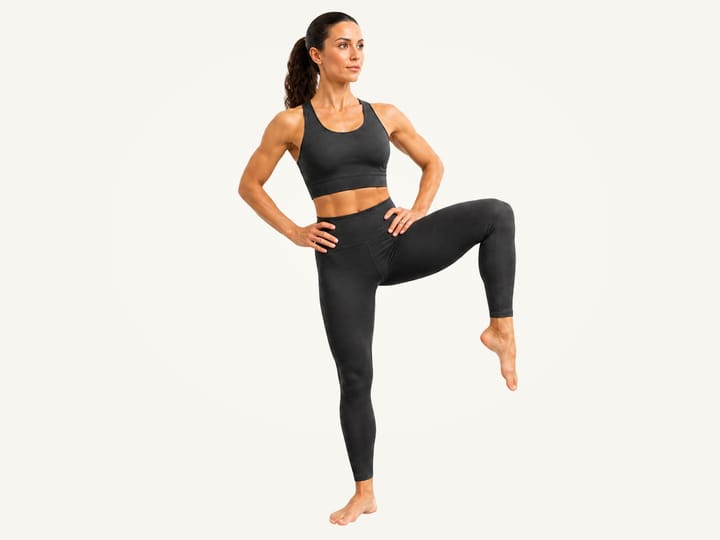
1Standing Hip Circles
45sLift one knee and trace a slow, controlled circle from the hip.
How to do it
- Stand tall with your hands on your hips and shift your weight onto your right foot. Use a wall or sturdy support if needed.
- Lift your left knee in front of you, keeping it bent and your torso upright. Raise it only as high as you can without rounding your back or hiking your pelvis.
- Slowly move your left knee out to the side from the hip. Keep your pelvis facing forward and your standing leg steady; make the circle smaller if you start to lean.
- Keeping the left knee bent, rotate the hip so the foot moves behind you, then guide the knee gently backward. Stay within a range that lets your back and pelvis remain steady.
- Bring your left leg back beneath you to complete the circle. Repeat slowly in the reverse direction, then change to your right leg when ready, or follow the routine’s side cue.
Why it matters
Explore several directions of hip movement with a slow bent-knee circle.
How it should feel
Controlled movement around the lifted hip, with the standing side keeping you steady.
Make it easier or harder
- EasierHold a stable support. Make a smaller circle at a comfortable knee height.
- HarderSlow the circle. Use the same range and less momentum.
 2
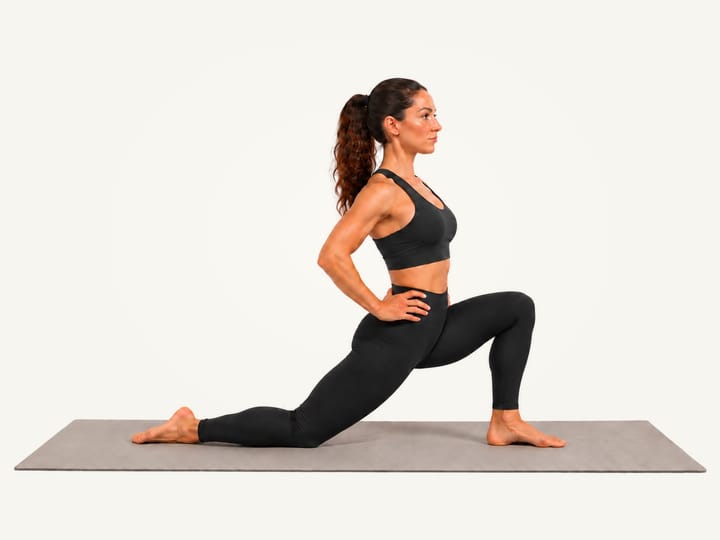
2Hip Flexor Lunge
1mTuck the pelvis in a half-kneel, then shift forward within a comfortable range.
How to do it
- Kneel on your right knee with your left foot flat in front, leaving room to shift forward comfortably. Begin with your right hip over the kneeling knee. Rest your hands lightly on the left thigh.
- Move both hands to your hips. Squeeze your right glute and gently tuck your tailbone under, keeping your ribs stacked over your pelvis.
- Keeping the gentle tuck and your torso upright, slowly shift your hips forward to a comfortable stretch at the front of the right hip. Keep your left heel and right knee grounded; avoid arching your lower back. Hold comfortably, then release and repeat on the other side. In a timed routine, change sides at the cue.
Why it matters
Stretch the front of the hip while practising a controlled pelvic position.
How it should feel
A comfortable stretch at the front of the hip on the kneeling side.
Make it easier or harder
- EasierPad the knee, shift less. Keep the glute squeeze with little or no forward travel.
- HarderAdd an overhead reach. Raise the kneeling-side arm without arching your back.
When to stop
Stop if the position increases lower-back pain.
 3
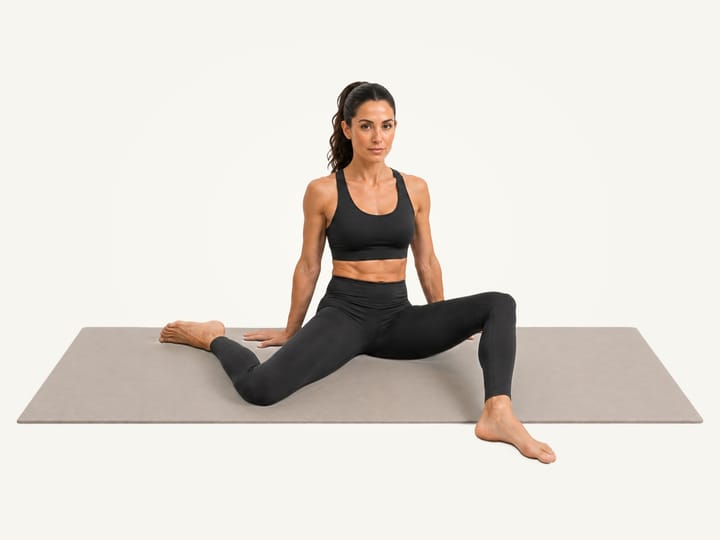
390/90 Hip Switches
30sRotate both hips from one seated 90/90 position to the other with slow, controlled switches.
How to do it
- Sit tall with one leg in front and the other behind, both knees bent toward 90°. Place your fingertips behind you for light support.
- Keeping your feet in roughly the same spots, lift both knees together and guide them through centre. Let the feet pivot as needed.
- Lower the knees with control toward the other side until you reach a comfortable mirror 90/90 position. Reverse and continue alternating slowly.
Why it matters
Practise turning both hips between seated positions with control.
How it should feel
Movement around the hips, without pinching in the groin or strain through the knees.
Make it easier or harder
- EasierRaise your seat. Sit on a firm cushion, keep hands behind you and use less range.
- HarderUse less hand support. Reach hands forward only while you can stay controlled.
When to stop
Stop if you feel hip pinching or knee pain.
 4
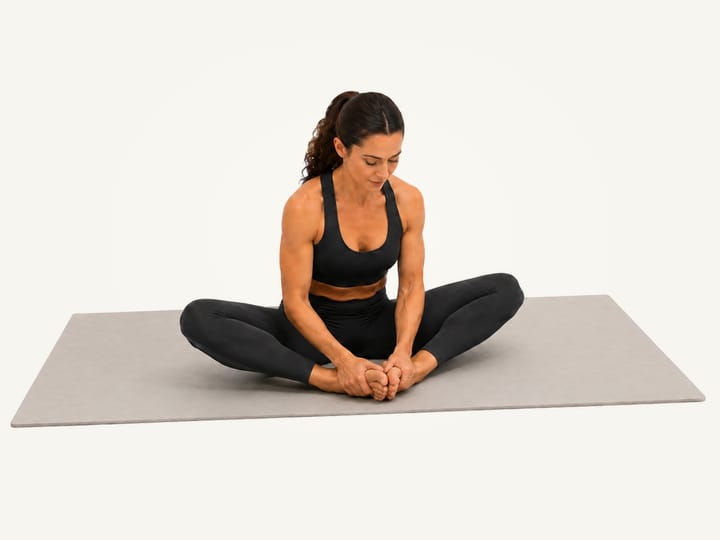
4Seated Butterfly
30sSit tall with the soles of your feet together and let your knees open.
How to do it
- Sit tall with your knees bent and feet flat on the floor. Rest your hands beside your hips for balance.
- Bring the soles of your feet together and let your knees open comfortably. Hold your feet lightly with both hands.
- Keep your spine long and hinge slightly forward from your hips if comfortable. Relax your knees without pressing them down, and breathe slowly for the prescribed time.
Why it matters
Stretch the inner thighs in a seated position with both hips opening outwards.
How it should feel
A gentle stretch through the inner thighs and groin.
Make it easier or harder
- EasierRaise your seat. Sit on a cushion and leave out the forward fold.
- HarderBring the feet nearer. Add a small hip hinge while keeping the back long.
 5
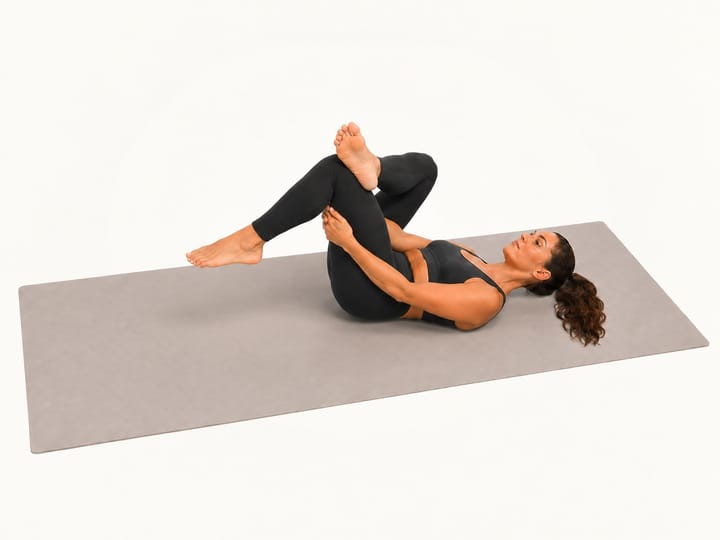
5Figure Four (Supine)
1mLie on your back, cross one ankle over the other thigh and gently draw the supporting leg in.
How to do it
- Lie on your back with both knees bent and feet flat. Rest your head, shoulders and pelvis on the mat.
- Rest your right ankle on your left thigh, just above the knee. Flex the right foot and let the right knee open comfortably.
- Lift your left foot slightly. Reach your right arm through the opening between your legs and your left arm around the outside. Join your hands behind the left thigh.
- Keep the same grip and gently draw the left thigh closer until you feel a comfortable stretch in the right glute. Keep your head and shoulders down. Release and lower the left foot before uncrossing and repeating on the other side; in a timed routine, switch at the cue.
Why it matters
Stretch the outer hip while the floor supports your body and removes the need to balance.
How it should feel
A comfortable stretch through the outer hip and glute of the crossed leg.
Make it easier or harder
- EasierLeave the foot grounded. Hold the crossed-leg position without pulling the thigh in.
- HarderDraw the thigh closer. Use a small increase while the pelvis stays level.
When to stop
Stop for back pain, knee or hip pain, pins and needles, or symptoms travelling down the leg.


Do this routine in the Prep app
Get Hip Mobility as a guided, timed session — with every move demonstrated and adjustable to how you feel.
Download on iOS