
Mobility goal · 3¼ min
Squat Mobility Exercises
Work towards a deeper, more comfortable squat with mobility for your ankles, hips and upper back. About three minutes to open up the bottom of your squat.
Do this routine in the Prep app
Get Deep Squat Mobility as a guided, timed session — with every move demonstrated and adjustable to how you feel.
Download on iOS
 1
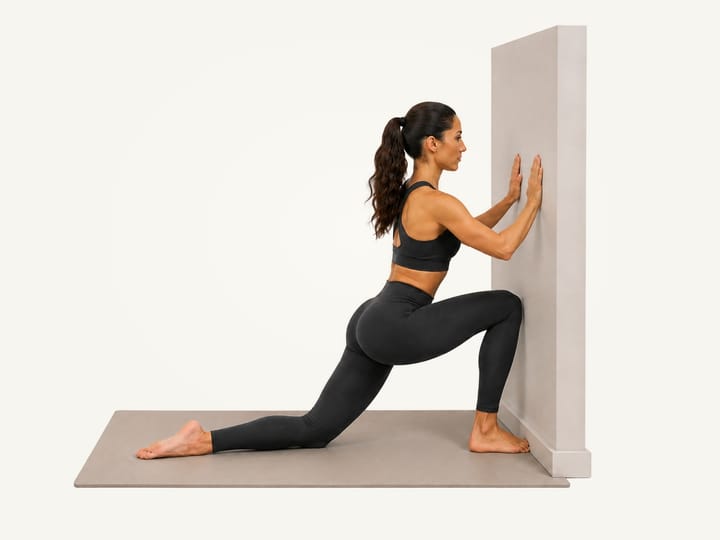
1Knee-to-Wall Ankle Mobility
45sHalf-kneel facing a wall and gently rock the front knee forward with the heel down.
How to do it
- Half-kneel facing a wall with your left foot flat in front and your right knee supported on the mat. Place both palms on the wall. Point your front toes toward the wall and start close enough to move comfortably while keeping the heel down.
- Gently move your left knee forward over your toes toward the wall, keeping the whole foot planted and your right knee down. Stop before your heel lifts or the ankle pinches. Pause briefly, rock back and repeat smoothly.
- When changing sides, or at the side cue in a routine, shift back using the wall for support and settle into kneeling. Place your right foot flat in front and your left knee on the mat. Gently rock the right knee forward toward the wall with the heel and forefoot down, then rock back and repeat for the remaining time. Finish by shifting back into a comfortable kneeling position.
Why it matters
Practise moving the shin forwards over a grounded foot, a movement used in walking and squatting.
How it should feel
Gentle movement or stretch around the ankle, Achilles or calf, without a pinch at the front.
Make it easier or harder
- EasierStart nearer the wall. Use a smaller forward rock with the heel down.
- HarderMove slightly farther back. Only if the same knee reach stays comfortable with the heel down.
When to stop
Stop before ankle pinching or pain.
 2
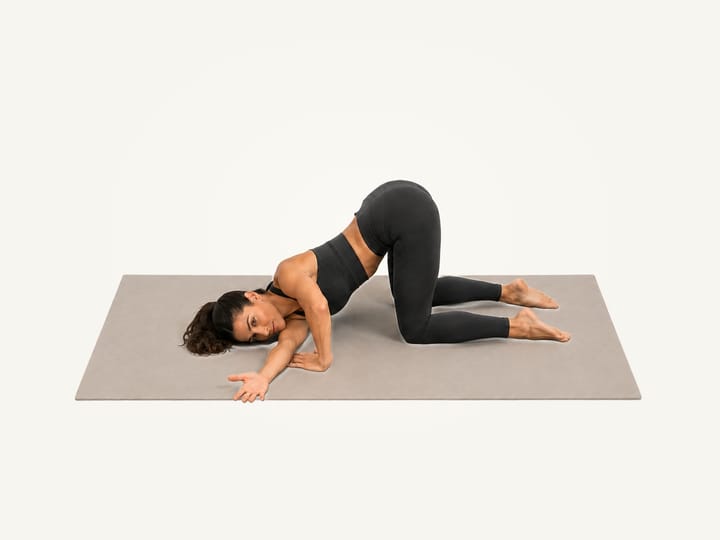
2Thread the Needle
1mFrom all fours, slide one arm underneath you and gently turn your upper back.
How to do it
- Start on all fours with your hands under your shoulders and knees under your hips.
- Keep your left palm planted. Slide your right arm beneath your left armpit, palm up, and let your upper back rotate.
- Lower your right shoulder and the side of your head onto the mat, only as far as comfortable. Keep your hips over your knees and breathe. After the hold, or at the midpoint cue in a routine, press into your left palm, return to all fours, and switch sides.
Why it matters
Explore upper-back rotation with one hand supporting you.
How it should feel
A comfortable stretch across the upper back and behind the shoulder of the threaded arm.
Make it easier or harder
- EasierSupport head and shoulder. Use a folded blanket and a shorter reach.
When to stop
Stop if the position causes neck pain or sharp pain.
 3
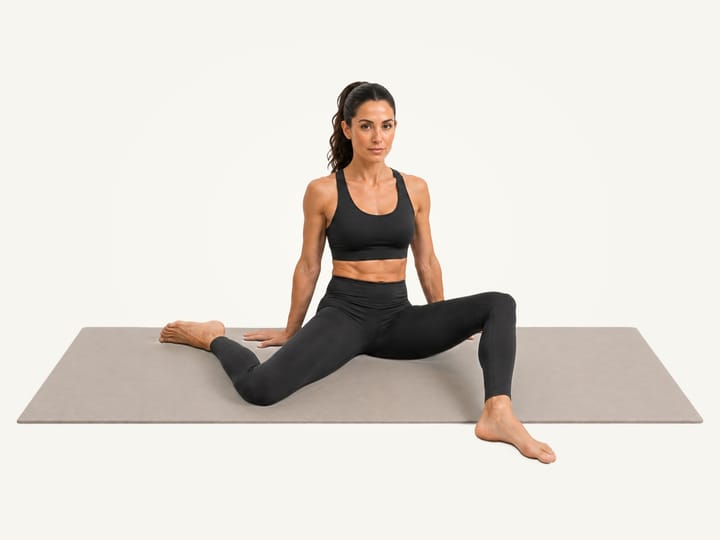
390/90 Hip Switches
30sRotate both hips from one seated 90/90 position to the other with slow, controlled switches.
How to do it
- Sit tall with one leg in front and the other behind, both knees bent toward 90°. Place your fingertips behind you for light support.
- Keeping your feet in roughly the same spots, lift both knees together and guide them through centre. Let the feet pivot as needed.
- Lower the knees with control toward the other side until you reach a comfortable mirror 90/90 position. Reverse and continue alternating slowly.
Why it matters
Practise turning both hips between seated positions with control.
How it should feel
Movement around the hips, without pinching in the groin or strain through the knees.
Make it easier or harder
- EasierRaise your seat. Sit on a firm cushion, keep hands behind you and use less range.
- HarderUse less hand support. Reach hands forward only while you can stay controlled.
When to stop
Stop if you feel hip pinching or knee pain.
 4
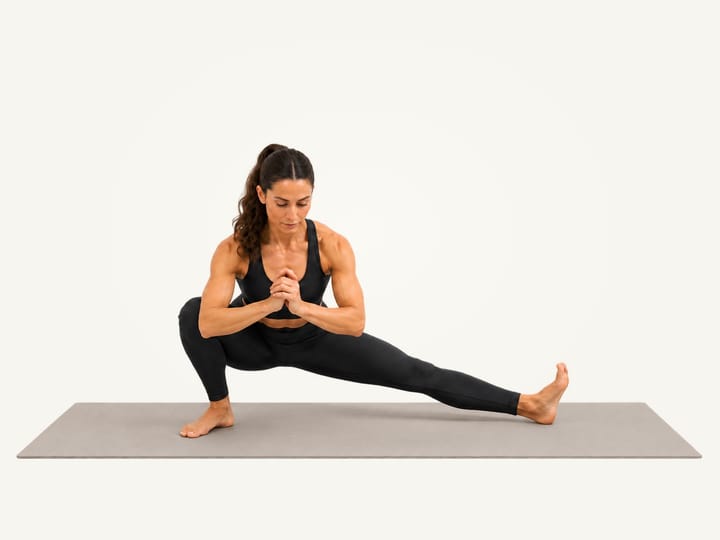
4Cossack Squats
30sWide stance, shift weight side to side, sitting into one hip.
How to do it
- Stand with feet wider than your shoulders, toes slightly out, and hands clasped in front.
- Shift onto your right leg, bending the right knee while keeping the left leg straight.
- Sit into your right hip as low as you comfortably can, keeping your right heel down and chest lifted. Let the left toes turn up if needed.
- Press through your right foot and rise through the centre. Bring the left foot flat before shifting onto it.
- Bend the left knee and sit into the left hip, keeping the right leg straight and left heel down. Rise through the centre and continue alternating.
Why it matters
Practise a controlled side-to-side weight shift from a wide stance.
How it should feel
Work through the bent leg and a stretch along the inner thigh of the long leg.
Make it easier or harder
- EasierUse a stable support. Hold a doorframe and keep the weight shift shallow.
- HarderPause on each side. Keep the working heel down during a brief pause.
 5
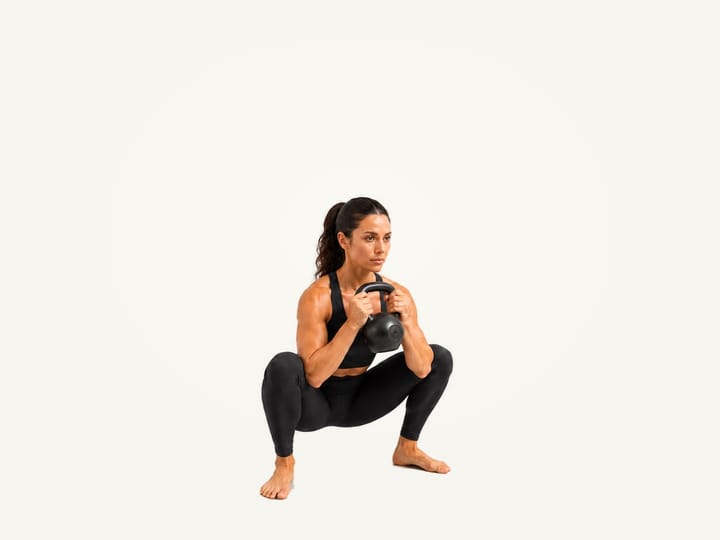
5Goblet Squat Hold
30sHold a light weight close to your chest and lower into a comfortable squat.
No weight? A bag or heavy book works instead.
How to do it
- Stand with feet about shoulder-width apart and toes turned slightly out. Hold a light kettlebell by its horns close to your chest, with elbows pointing down.
- Bend at the hips and knees and lower slowly between your feet. Keep both heels grounded, the weight close and your spine long as the knees follow the direction of your toes.
- Stop at a comfortable depth with the weight close and elbows resting lightly inside the knees, without forcing them apart. Breathe through the hold, then press through the feet to stand. Use the routine prescription if timed.
Why it matters
Practise holding a squat position while exploring comfortable hip and ankle range.
How it should feel
A comfortable opening around the hips and ankles, with leg and trunk effort holding the position.
Make it easier or harder
- EasierUse a higher squat. Use a lighter weight, or practise an unweighted squat towards a stable chair.
- HarderExplore a little more depth. Keep the same light load, grounded heels and easy breathing.
When to stop
Stop if the hold causes knee pain.


Do this routine in the Prep app
Get Deep Squat Mobility as a guided, timed session — with every move demonstrated and adjustable to how you feel.
Download on iOS