
Lower leg · 3¾ min
Calf & Achilles Stretches
Loosen tight calves and Achilles with a short stretch and mobility routine of about four minutes. Useful before or after running, or any time your lower legs feel stiff.
Do this routine in the Prep app
Get Calf & Achilles as a guided, timed session — with every move demonstrated and adjustable to how you feel.
Download on iOS
 1
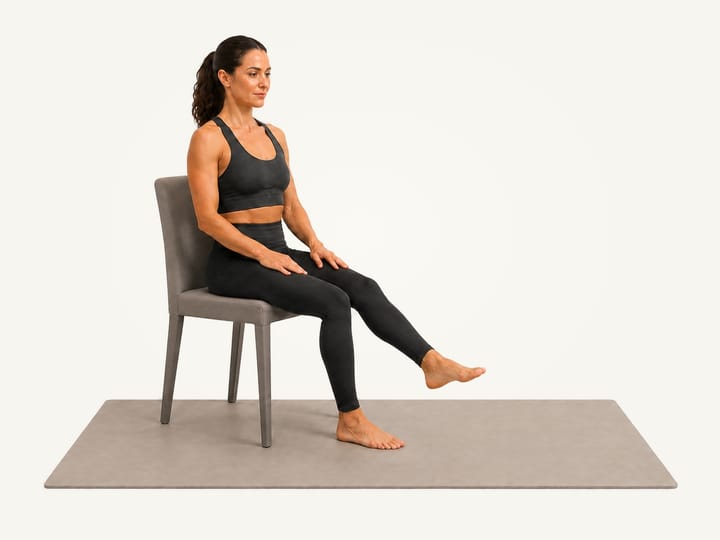
1Ankle Circles
45sLift one foot and circle the ankle in both directions.
How to do it
- Sit upright on a stable chair with both feet flat on the floor. Rest your hands on your thighs and keep your shoulders relaxed.
- Lift your left foot clear of the floor with the leg comfortably extended. Keep the shin still and slowly draw circles with your toes through a comfortable range. Change direction after a few circles.
- At the halfway cue, lower your left foot and lift your right. Circle the right ankle in both directions for the remaining time, keeping the movement smooth and comfortable.
Why it matters
Explore ankle movement in several directions without loading the foot.
How it should feel
Small, smooth movement around the ankle while the lower leg stays quiet.
Make it easier or harder
- EasierSit down. Support the leg and make a smaller circle.
 2
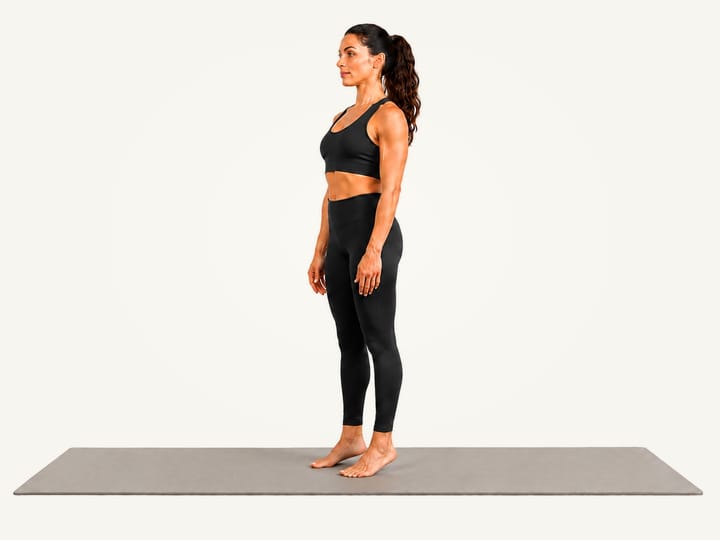
2Heel-to-Toe Rocks
30sRock smoothly from heels to toes to wake up the ankles and lower legs.
How to do it
- Stand tall with feet hip-width apart and both soles flat. Keep your knees soft and use a stable wall or secured chair if needed for balance.
- Slowly lift both heels a small amount while the balls of the feet and toes stay grounded. Keep your torso upright, then lower both heels fully to the mat.
- With both heels grounded, gently lift both forefeet and toes toward your shins. Lower your feet flat, then repeat the heel-to-toe sequence smoothly without bouncing or swaying.
Why it matters
Practise lifting the heels and forefeet in turn while keeping your trunk steady.
How it should feel
Alternating work through the calves and front of the shins as the feet move.
Make it easier or harder
- EasierMake the lifts smaller. Hold a wall or secured chair for balance.
- HarderSlow each lowering. Set the feet down gently between directions.
 3
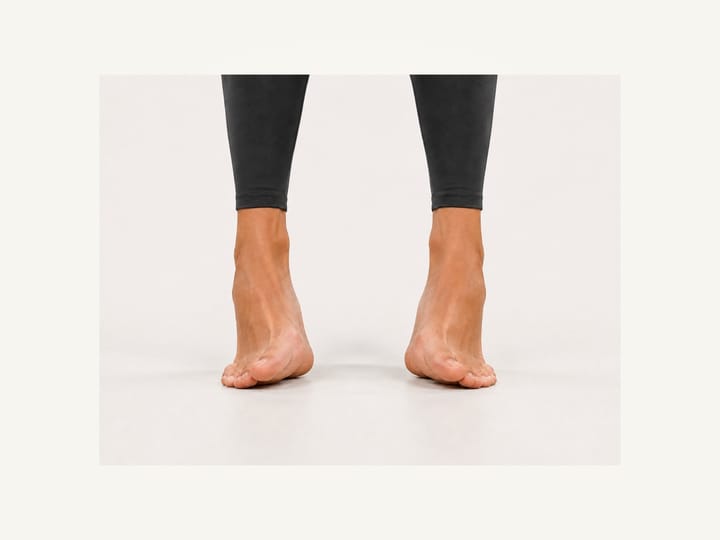
3Lateral Foot Rocks
30sExplore small movements towards the inside and outside edges of the feet.
How to do it
- Stand tall with feet hip-width apart, both soles flat and knees soft. Keep a stable wall or chair within reach and use it if needed.
- Rock a small amount onto the outside edges of both feet. Return both soles flat, then make a small rock towards the inside edges. Repeat slowly with your torso steady, and finish with both feet flat.
Why it matters
Explore small side-to-side foot movements while standing with control.
How it should feel
A small change through the ankles and arches, without a sharp pinch or a rolling collapse.
Make it easier or harder
- EasierReduce the rock. Use a wall and a very small pressure shift.
When to stop
Stop if you feel sharp ankle pinching or pain.
 4
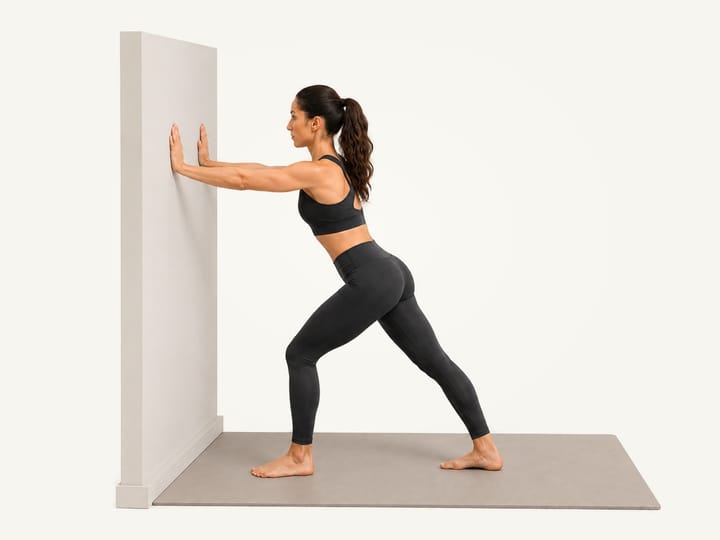
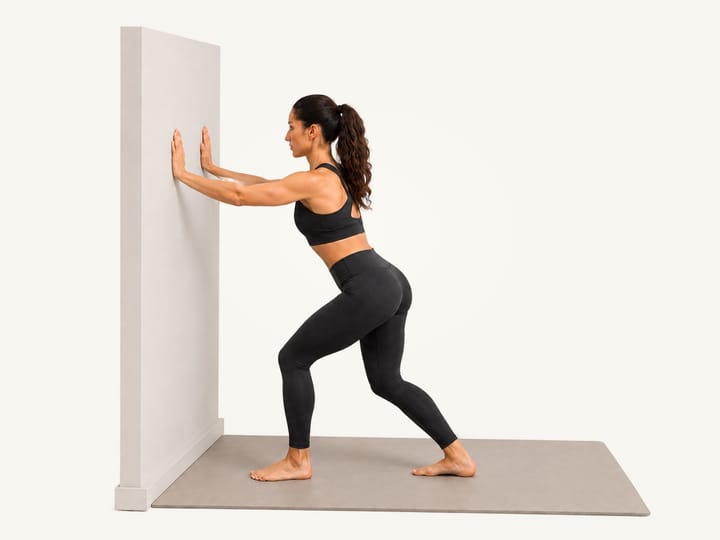
4Calf Wall Stretch (Straight Leg)
1mLean towards a wall with your back knee straight and heel grounded.
How to do it
- Stand facing a wall with your feet hip-width apart. Place both palms flat on the wall at shoulder height.
- Adjust your front foot if needed, then step your left foot back, pointing it toward the wall. Place the whole sole and heel on the floor, keeping your left knee straight and both hands supported on the wall.
- Gently bend your right knee and lean toward the wall, keeping your left knee straight and heel grounded. Hold comfortably until the switch-sides cue, then ease out, bring your feet together and repeat with your right leg back for the remaining time.
Why it matters
Stretch the calf with the knee straight, complementing the bent-knee version.
How it should feel
A gentle stretch through the calf of the back leg.
Make it easier or harder
- EasierShorten the stance. Bring the back foot nearer and lean less.
- HarderIncrease the lean gently. Keep the back knee straight and heel down.
 5
5Calf Wall Stretch (Bent Knee)
1mBend both knees gently at a wall, keeping the rear heel on the floor.
How to do it
- Stand facing a wall with feet hip-width apart and both palms flat on it at shoulder height.
- Step the left foot a short distance back with both feet pointing forwards. Bend both knees gently, keeping the left heel down. Hold a comfortable lower-calf stretch, then release and repeat with the right foot back; follow the routine cue if timed.
Why it matters
Use a bent-knee position to place the stretch lower in the calf.
How it should feel
A gentle stretch low in the calf of the back leg.
Make it easier or harder
- EasierUse a smaller bend. Shorten the stance and keep both hands supported.
- HarderBend a little more. Increase the bend only with the rear heel grounded.
When to stop
Stop immediately for sharp Achilles pain, a sudden pop or new swelling.


Do this routine in the Prep app
Get Calf & Achilles as a guided, timed session — with every move demonstrated and adjustable to how you feel.
Download on iOS